Martin Dies Quotes
I am not in a position to say whether we can legislate effectively in reference to this matter [Communist propaganda], but I do know that exposure in a democracy of subversive activities is the most effective weapon that we have in our possession.
Martin Dies, 1901-1972, U. S. Congressman (Democrat, TX), First Chairman of the House Un-American Activities Committee, 83 Congressional Record, 1938
Sourced by: Eigen's Political and Historical Quotations


Statement about issue management in the Internet age.

Although it seems incredible to us today, thousands of people were arrested and prosecuted under the Espionage Act. The government particularly targeted leftists such as Eugene V. Debs, Bill Haywood, J. Philip Randolph, Victor Berger, John Reed, Max Eastman, and Emma Goldman. Debs was sentenced to 20 years in prison for criticizing the Act itself.


Hollywood was actually very diverse but very tolerant. Hoover, an intolerant racist himself, saw the encouragement of civil rights for Blacks as support of Communism because the Communist Party made a major issue over American Racism. Most Communists were also opposed to racial discrimination, but most of those advocating an end to discrimination were not communists although Southern Politicians almost always claimed that they were.

President George W. Bush initiated an invasion of Iraq based on the fact that Iraq was developing nuclear, chemical and biological weapons. After the invasion however, there were none of these weapons found and much evidence that there were not any at that point in time. By the time Congress, the body which is supposed to declare war, found out that the reason for the war was bogus, it was too late. We had already occupied the country and were in the midst of a civil war. The President either acted on bad intelligence or wanted to invade Iraq for other reasons and history may finally tell us which, but Fein sees the problem as too much secrecy in the executive branch.

Prior to Germany Declaring War on the United States, there was a small but influential group of American Fascists who were great admirers of Hitler and Mussolini and the “reforms” they had made in Germany and Italy. They saw Germany’s invasion of other European nations as a good think to “reform” Europe. The opposed American support of England and U. S. entry into the war. Their influence waned after Pearl Harbor and Germany declaring war on the U. S. Many of them arose again after WWII ended but they no longer expressed admiration for Hitler and Mussolini—concentrating at that time on anti-communisim. This caused some difficulties for the majority of anti communists who were also anti fascists.


Dodd, in Berlin from 1933 to the onset of WWII, was able to see first hand what Hitler and the Nazi Movement was really like, Although he for the United States and Churchill for England warned early on, the politics of the times would not allow any action to stop or curtail Hitler. America, in particular, had a strong isolationist Republican wing and in addition, a small but loud core of pro Fascist, Hitler admirers such as Charles Lindburg, Father Coughlin, and Henry Ford. America had virtually no serious military capacity at the time, and with the Depression, FDR had all he could do to just gradually build up the military. By the time the Democracies realized that Dodd and Churchill were right, it was too late to prevent WWII. Dodd died in 1940 just when it was clear that he had been right.

He was referring to the non-democratic states of the Middle-East.

The Red Scare had affected the country. The House Un-American Activities Committee had frightened much of the country claiming that the Communists had infiltrated the government. But when facts and proof were demanded, they only came up with some workers in the Hollywood film industry who had gone to communist meetings and some who had joined the party before the War when The Great Depression was still plaguing the country. The Hollywood and TV executives caved in to the political demagogues and fired and blacklisted not only the communists but those who refused to testify. The actors and musicians could not work for several years until the country came to its senses, but the screenwriters wrote under false names. At least one Academy award was won that way.

Samuel Langhorne Clemens, 1835-1910


_0_thumbnail_47x47.jpg)
He was countering the argument of unlimited free speech advocates that fascist hate speech should not be countered by more speech on teh other side. Historically, he observed, that Fascism has only been defeated by force and control.


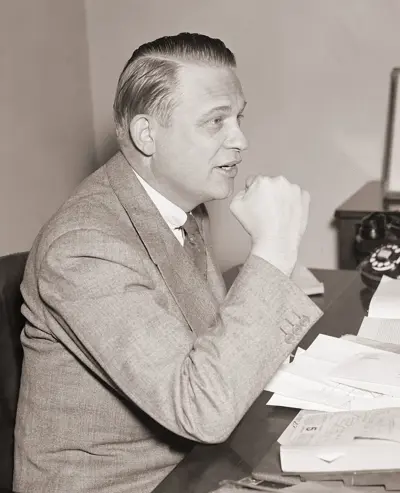
Martin Dies Jr. was a Texas politician and a Democratic member of the United States House of Representatives. He was elected as a Democrat to the Seventy-second and after that to the six succeeding Congresses (March 4, 1931 – January 3, 1945). In 1944, Dies did not seek renomination to the Seventy-ninth Congress, but was elected to the Eighty-third and to the two succeeding Congresses (January 3, 1953 – January 3, 1959). Again, he did not seek renomination in 1958 to the Eighty-sixth Congress. In 1941 and 1957, he was twice defeated for the nomination to fill a vacancy in the United States Senate. Dies served as the first chairman of the Special Committee to Investigate Un-American Activities from 1937 through 1944 (Seventy-fifth through Seventy-eighth Congresses).
