William E. Borah Quotes
Of all times in time of war the press should be free.
William E. Borah, 1865-1940, U. S. Senator (Republican, ID), Bedrock: Views on Basic National Problems (1936
Sourced by: Eigen's Political and Historical Quotations

Note how the second paragraph nullifies the first of the government declares an emergency. This is a trick that is very common in constitutions.


In modern times, there have been many incidents of members of the press not supporting the current war effort. Sometimes, it is the greed to get a story, and other times, it is to advocate an alternate strategy. Most often it is a belief that in democracy, only a knowledgeable public can govern the government. The administration or general cannot be relied upon to provide accurate information. Many think The Vietnam War started this problem, but it has been ongoing ever since the Revolution. In the War of 1812, with many Americans dying fighting, other Americans were critiquing the war infuriating the military and the President. Similarly, in all other wars including the Civil War. The relationship between Grant and the Press was as vitriolic as that of the Vietnam War. The war where there was the least conflict between the military and the press was WWII where press were given total access to the front lines without the controls that developed later in the Iraq War.


Two decades later Jefferson, after his Presidency, had developed a different attitude towards the press. See {585116}.


Referring to the Erdogan government of Turkey. That country elected Erdogan who then turned his back on the Ataturk inspired democracy and instituted many non-democratic policies and practices including jailing civil servants, teachers and journalists who publicly criticize the president or the government.
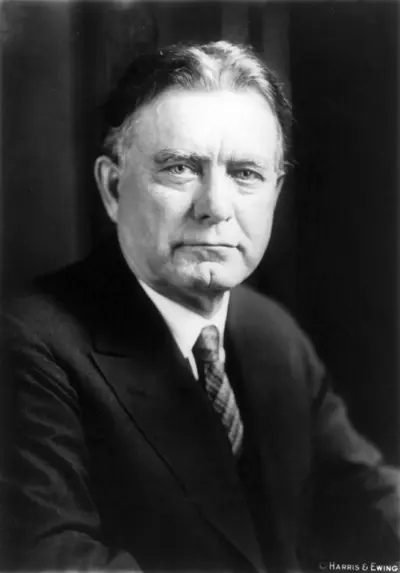
William Edgar Borah was an outspoken Republican United States Senator, one of the best-known figures in Idaho's history. A progressive who served from 1907 until his death in 1940, Borah is often considered an isolationist, because he led the Irreconcilables, senators who would not accept the Treaty of Versailles, Senate ratification of which would have made the U.S. part of the League of Nations.
