Morgan Freeman Quotes
I am going to stop calling you a white man and I'm going to ask you to stop calling me a black man.
Morgan Freeman, Actor, "Freeman calls Black History Month ‘ridiculous’", December 5, 2005
Sourced by: Eigen's Political and Historical Quotations

At the time Thomas was the Chairman of the Equal Employment Opportunity Commission. In an informal discussion among some of the staff, a white employee was describing the difficulty he had encountered trying to get a bank loan. This quotation illustrates that Thomas has had an antipathy to affirmative action and racial programming or preferences well before he was appointed to the Appellate and later the Supreme Court.


Thus testimony was an example of one of the reasons that Black Americans lobbied to end the use of the word, Negro, in official documents to describe them. “Negro” was a term used by whites to describe Blacks but rarely used by Blacks until Reconstruction. A century later, cultural and official language went back to the language that the slaves had used to describe each other and added “African American” as well.


Johnson was sentenced to jail in about 1900 for having a boxing match in Texas where Johnson beat a white boxer. His opponent was jailed with him for the integrated fight. At the same time, Texas was notorious for allowing a man whose wife had committed adultery to the rival man and often the wife as well. The practice gradually was outlawed but many Texas juries refused to convict such a man and murderers often got away unpunished. It was only in the 1970’s that the practice was almost eliminated, but even so, occasionally a murdering husband would be acquitted by a Texas jury acting in the Texas tradition. It is interesting to examine this historical fact in the light of modern “honor killings” of adulterous women in some Muslim societies.


Although intermarriage is discouraged by many cultures in America, Black intermarriage is the only kind that for years had the force of the criminal law supporting the prejudice.


Despite the critical need of the war, racism was so extensive in the WWII military that Blacks were relegated to menial duty of cooking, truck driving and construction but were actually not allowed to fight at the beginning despite the fact that many had volunteered. Many whites—especially the southerners—were convinced that Negroes could not fight, that they lacked the courage and commitment. The need for troops in the Pacific theater was so great that in the invasion of Saipan that was so difficult, Black troops were committed to the fight and performed brilliantly. The Commandant of the Marine Corps, General Vandergrift was not only the first Marine 4 star general who was on active duty, but he personally was a recipient of the Medal of Honor. When he spoke, all marines and many others in the service listened. This was the break-though. Negroes in combat was no longer some kind of social experiment for most Marines except the most vitriolic rascists.
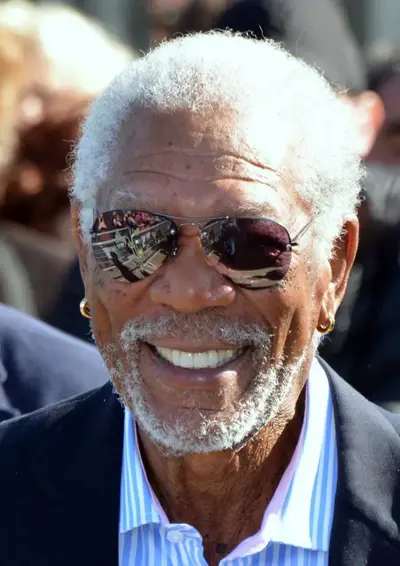
Morgan Freeman is an American actor, director, and narrator. He has appeared in a range of film genres portraying character roles and is particularly known for his distinctive deep voice. Freeman is the recipient of various accolades, including an Academy Award, a Golden Globe Award, and a Screen Actors Guild Award.
