Jack Johnson Quotes
Just remember, that whatever your write about me, I was a man.
Johnson was the greatest boxer of his era and perhaps of all time. The not only beat the what champions in an era of Jim Crowe but he lived an ostentation life as a celebrity -- almost unheard of for a Black man at tht time. He never assumed any subervience which was expected of all Negroes at the time, He lived openly with a white woman and was jailed for a while. What is particualrly interesting about this quotation is that with all his accomplishments as the best boxer in the world, a man wh was very wealthy, that the thing he was most proud of was that he had maintained his manhood and did not cower as almost all blacks were forst to do. What he achieved ia what most Black men have striven for and still do.
Jack Johnson. Statement to a reporter shortly before his death.
Sourced by: Eigen's Political and Historical Quotations


He was the only Black member of Congress at the time.


Battle was the grandson of a Revolutionary war soldier and the son of a former slave. He was the first person inducted into the New York City Police Force when it was first organized after the consolidation of the boroughs in 1898. He became the first Black Police Sargent and the first Black Lieutenant of the city and was probably the only Black senior police officer in the country at that time.

One reason that this is such a noteworthy quote is that Rubio was in the midst of his campaign for the Republican Presidential Nomination where only the most dedicated and generally conservative members of the party turn out to vote in the primaries. And a very large part of them were Southern racists who switched parties in response to the Civil Rights Act passage in 1964. Since then the very conservative wing of the party has had a de facto veto on Republican presidential candidates. Rubio's statement was the view of the majority of Americans and a significant number of Republicans, but this courageous statement of his true belief's risked his chances in the primary.

Jackson was a civil rights worker who was murdered by white racists trying to intimidate Blacks from their desegregation efforts. King broadened the moral responsibility to those who did not oppose the segregationist system prevalent in the South.
Billy Sunday was the most famous preacher of the day. Unlike the vast majority of white preachers, he not only preached to black audiences but exuded an atmosphere of friendliness and comfort around Blacks that amazed most. Most Black leaders thought Sunday was very good for race relations, but there were some critics like Grimke. Sunday was castigated by many racist whites for preaching to Blacks, but he did not go as far as to condemn or preach against racism and the discrimination of the day and he would not preach to an integrated audience. See {585416} for another critique.


President Johnson said this after a meeting with governors from the South and border states, who had criticized his policies on civil rights as well as his vocal support of expanded rights for blacks
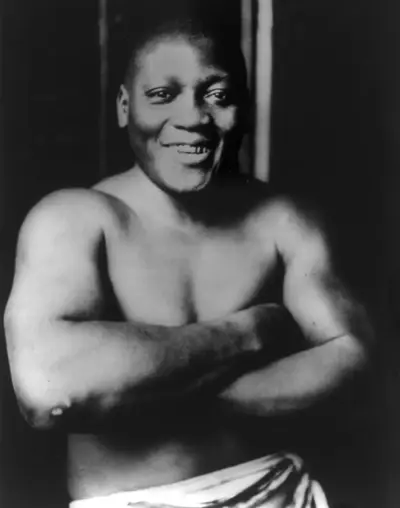
John Arthur Johnson, nicknamed the "Galveston Giant", was an American boxer who, at the height of the Jim Crow era, became the first African American world heavyweight boxing champion (1908–1915). Widely regarded as one of the most influential boxers of all time, one of the period's most dominant champions, and as a boxing legend, his 1910 fight against James J. Jeffries was dubbed the "fight of the century". According to filmmaker Ken Burns, "for more than thirteen years, Jack Johnson was the most famous and the most notorious African-American on Earth". Transcending boxing, he became part of the culture and history of racism in the United States.
