Rose Macaulay Quotes
Here is one of the points about this planet which should be remembered; into every penetrable corner of it, and into most of the impenetrable corners, the English will penetrate. They are like that; born invaders. They cannot stay at home.
Macaulay, Rose. A Casual Commentary. Boni & Liveright, 1926.


When the British first colonized South Africa, the area they used was not inhabited or very sparcely so. However, some Black tribes (including the Zulus) were moving from the north and themselves were colonizing or annexing the sparcely populated areas to their kingdom. The British were most interested in Trading so did not have large land asperations. The Dutch white Boer Africanners, in contrast, wanted to farm the lands and use the range for their cattle. They wanted the land. The English policy was that there would be friendly relations with the Black tribes surrounding their Cape Colony and no one should take their land. However the Boers started attacking the Black areas and seizing their farms and villages. At first, the English assumed that the Blacks would easily be able to ward off the invasion as the Afrikanners had no professional troops like the British. However, the neighboring native tribes were not very warlike or good fighters. They were being overrun by the Zulus coming from the North and the Boers from the South. The British Government had a real problem in that they would have to have British soldiers fight the white Afrikanners if they wanted to stop the illegal white invasions. This was the root of the Boer War where the British would be fully at war with the Africanners.

Jefferson was not the only one who thought that taking Canada and driving the English out would be relatively easy as Canada was vast and the English troops were spread very thin. However, although the English had great strategic weakness, the American officers who led the Canadian effort were not very competent and made a series of terrible tactical decisions and the Canadian operation failed in a terrible fiasco.


He was a great believer in moving large numbers of Dutch settlers to the Dutch colonies in the East Indies.

One of the reasons that Jefferson and others were so anxious to expand the territory of the United States was that Britain had operated with the policy that curtailed and limited the population growth of the American colonies and the resentment of this policy led to growth of America and the Westward expansion.


The speech was never actually delivered, but instead the Bishop published it. It received wide distribution including in America where it was published by the Maryland Gazette on September 29, 1774.


Policy statement regarding European rival Germany’s colonial expansion in Africa which was being “carved up” by the European powers.
The Sudan was then under the control of the Egyptian government.


Paine was describing the conquest of England in 1066 by William the Conqueror.


The “foreign tribes” were the English and other European traders who were bringing opium to China. Lin had assembled a fleet of 80 ships at the mouth of the Pearl River to persuade the European powers that they would fight if the foreign ships would not cease trading in opium. The British in particular were not intimidated, and they militarily forced the Chinese to accept their “right” to sell opium. The Emperor sent Lin to the “boondocks”—see {621320} for misjudging and provoking British military action, but Lin is remembered for his sound moral and public health perspective. A bronze statue of Lin Zexu was erected in his honor in Chatham Square (Kimlau Square) of New York City's Chinatown and many other places in the world.
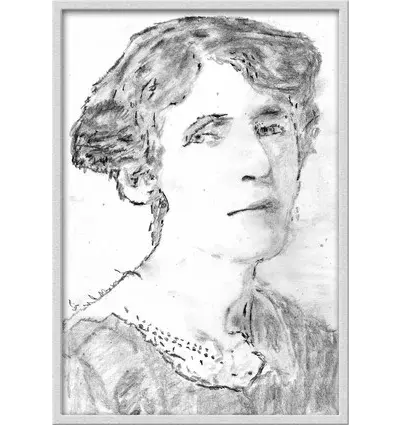
Dame Emilie Rose Macaulay, DBE was an English writer, most noted for her award-winning novel The Towers of Trebizond, about a small Anglo-Catholic group crossing Turkey by camel. The story is seen as a spiritual autobiography, reflecting her own changing and conflicting beliefs. Macaulay's novels were partly influenced by Virginia Woolf; she also wrote biographies and travelogues.
