Andrew Fletcher Quotes
All of our affairs, since the union of crowns, have been managed by the advice of English ministers, and the principal offices of the kingdom filled with such men, as the court of England knew would be subservient to their designs: by which means they had so visible an influence upon our whole administration, that we have, from that time, appeared to the rest of the world more like a conquered province, than a free independent people
Andrew Fletcher, 1653-1716, Scotts Legislator and Nationalist, Address to the Scots Parliament, May 1703
Sourced by: Eigen's Political and Historical Quotations


Vietnam and Thailand were both major powers both militarily and economically. Cambodia, adjacent to both was poor and weak. The two powers wanted little in Cambodia, but wanted to keep the other out. Both had military incursions into Cambodia, and thought that the cost of permanent occupation or annexation of the backward Cambodian Khmer areas was not worth the expense. However, Cambodia could do nothing which would offend either power.


This was written under the name of Ragnar Redbeard. There are a few scholars who believe that it was written by Jack London, but most credit Desmond.

unions and federations of two countries


James was a Catholic King and did not like Protestants but positively detested Puritans. He made good his and “harried them out of the land” much to the benefit of the American colonies to which they immigrated and the detriment of England. Many of the immigrants to America came for the religious freedom, but in the early days, no sooner did they arrive and become the majority, than they began to discriminate against other religions.


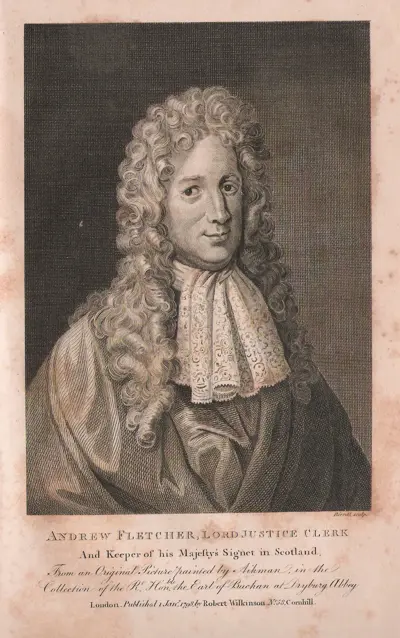
Andrew Fletcher of Saltoun was a Scottish writer and politician, remembered as an advocate for the non-incorporation of Scotland, and an opponent of the 1707 Act of Union between Scotland and England. Fletcher became an exile in 1683 after being accused of promoting insurrection. He was appointed the cavalry commander of the Monmouth Rebellion, but shortly after landing in England he killed another leading figure. He again went into exile, this time as a fugitive and with his estates forfeit. He returned with William of Orange, becoming Commissioner of the old Parliament of Scotland.
