Jean-Jacques Rousseau Quotes
He who has the base necessities of life should pay nothing; taxation on him who has a surplus may, if need be; extend to everything beyond necessities.
Rousseau, Jean-Jacques. A Discourse on Political Economy. Translated by G. D. H. Cole, E. P. Dutton & Company, 1913.


While the majority of the country approve of a financial transaction tax on the stock market, the financial industry has always fought it tooth and nail. It was a long tradition that the Barons and leading aristocrats lands were exempt from the taxes of the king, the most powerful forces in a democracy have lobbied to avoid taxation on their enterprises and finance is one of the very few business areas that have avoided taxation in America. Other than not liking taxes in general, Wall Street and the Banks argue that many financial transactions involve buying and selling securities in huge volume and making a tiny percentage on each share. If there were a tax of even a fraction of one percent, all these profitable trades would become unprofitable. Critics argue that that kind of speculating does not help the economy at all, and is what makes the discriminatory, unfair, computer trading possible and it would be a good reform to make that kind of trading unprofitable as more than 99 percent of the people cannot participate in it nor profit from it.
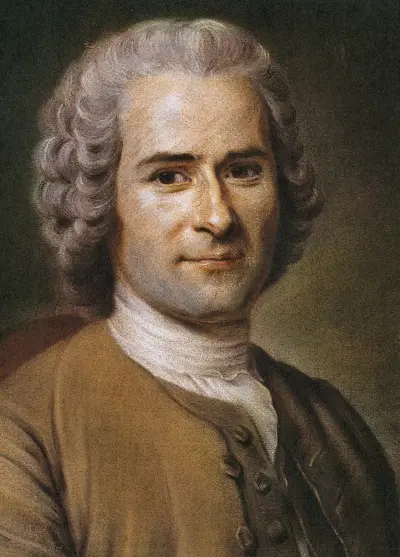
Jean-Jacques Rousseau was a Genevan philosopher, writer, and composer. His political philosophy influenced the progress of the Enlightenment throughout Europe, as well as aspects of the French Revolution and the development of modern political, economic and educational thought.
