Desiderius Erasmus Quotes
A good prince will tax as lightly as possible those commodities which are used by the poorest members of society ... staples without which human life could not exist.
Desiderius Erasmus, c. 1466-1536, Dutch Scholar & Theologian, The Praise of Folly
Sourced by: Eigen's Political and Historical Quotations


Martin was explaining the position of Pope John Paul II.

That philosophy became embedded in most of our utilities and necessary services. With electricity, the people who live in dense population clusters pay more so that rural residents can obtain electricity at reasonable prices. Internet, cable TV, and telephone are similar. In pharmaceuticals, Americans pay much higher rates while 3rd world countries pay less than their share. The communities who invested in water infrastructure early are today subsidizing those communities who invested little. And people who live in areas of easy water availability subsidize people in the areas where they have abused their water resources or had few to begin with. People who live in safe areas subsidize people who choose to live in flood planes or box canyons susceptible to fires by paying more for insurance so the people in high risk areas can obtain affordable insurance.

She improved the economy considerably but was stuck in a socialized economic ideology that inhibited major private sector growth, without which it is impossible to eliminate poverty and with which excessive greed can also produce poverty.

At the time of this quotation, the nation had gone through more than 3 decades of enormous increase in prosperity for the wealthy, and modest gains for the highly skilled, technically trained workers. However, correcting for inflation, average salaries did not increase at all. The middle class was particularly hard hit. Only 20 percent of the population benefitted from the growth at all; however, the 1 percent had rarely prospered more. Kenworthy’s principle did not apply for this period of American history.


He was concerned that if steps were taken to protect the environment and they slowed or shrank economic growth, the burden would fall disproportionately on the poor.


The "Great Depression" began the following year.
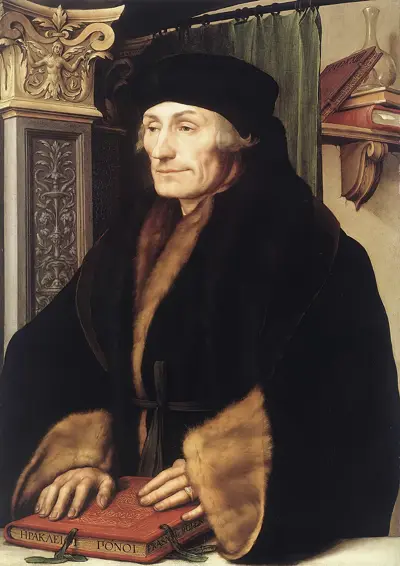
Desiderius Erasmus Roterodamus was a Dutch philosopher and Christian scholar who is widely considered to have been one of the greatest scholars of the northern Renaissance. As a Catholic priest, Erasmus was an important figure in classical scholarship who wrote in a pure Latin style. Among humanists he enjoyed the sobriquet "Prince of the Humanists", and has been called "the crowning glory of the Christian humanists". Using humanist techniques for working on texts, he prepared important new Latin and Greek editions of the New Testament, which raised questions that would be influential in the Protestant Reformation and Catholic Counter-Reformation. He also wrote On Free Will, In Praise of Folly, Handbook of a Christian Knight, On Civility in Children, Copia: Foundations of the Abundant Style, Julius Exclusus, and many other works.
