Charles Dickens Quotes
He was drunk upon the average once a day, and penitent upon an equally fair calculation once a month; and when he was penitent, he was invariably in the very last stage of maudlin intoxication. He was a ragged, roving, roaring kind of fellow, with a burly form, a sharp wit, and a ready head, and could turn his hand to anything when he chose to do it.
Dickens, Charles. The Posthumous Papers of the Pickwick Club. Chapman and Hall, 1837.


This volume roughly is to Islam what the Gospels are to Christianity. To most Muslims The Sunnah is a collection of holy material on the life of Mohammed. It is not of the force or importance as the Koran, but it is revered. This quotation is in the third person and does not have the Prophet’s exact words.


Alcoholism is a disease that has affected people of every occupation, every socioeconomic class, every color and nationality, and we all have seen instances so often that most people realize that anyone might be addicted to alcohol. The result is any accusation that someone is an alcoholic is plausible to most of us. As a result of this, it has become a favorite untrue slander in political attacks. Even when false it is believable as in the earlier decades of America, drinking heavily was a part of political culture and many would become addicted.


When Washington was younger and running for the colonial Virginia assembly, he bought beer and rum for all the voters in his precinct. He did not then realize the damage that alcohol can do. One of the commonalities between Lincoln and Washington were their experience in seeing alcohol cause the death and/or ruination of many. See {630832}.

He was describing the way that the Colonial America, Native American communities coped with the adverse consequence of violence brought about by liquor which had been given to the Indians by white traders for the purpose of impairing the Indians’ judgment so that they would trade more easily and on better terms. Since then and into the 21st century, business people have entertained’ potential customers with alcohol for the same general purposes.


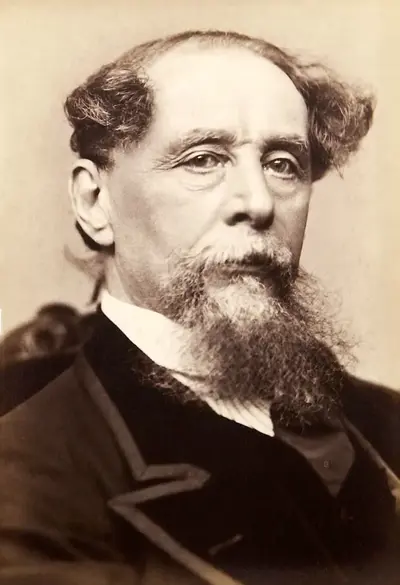
Charles John Huffam Dickens FRSA was an English writer and social critic. He created some of the world's best-known fictional characters and is regarded by many as the greatest novelist of the Victorian era. His works enjoyed unprecedented popularity during his lifetime and, by the 20th century, critics and scholars had recognised him as a literary genius. His novels and short stories are widely read today.
