Kelly Miller Quotes
Having achieved such signal successes in the east, Russia and Roumania being both disposed of, the German leaders planned a campaign designed to crush Italy.
Miller, Kelly. Kelly Miller's History of the World War for Human Rights. Austin Jenkins Co., 1919.


The Lusitania was an American passenger liner that was torpedoed by the German U-Boats. Edith Cavell was a British nurse who was assisting all wounded in Belgium, and Captain Charles Fryatt, was an English Merchant Captain who when his ship was attacked by a German submarine, fought back and rammed and sank the sub. In each case the German behavior was contrary to the then norms of civilized warfare.

Germany had just attacked Russia with whom it had a treaty. For a while, Hitler paid little attention to Italy and just gave their “ally” orders and instructions. Italian public opinion was concerned about the same question. See {627973} .

The only soldier ever so honored. Marshall was then Chief of Staff of the Army. This quotation is historically very important in that it refutes the accusation made by some FDR and New Deal enemies that Roosevelt was very naïve about the importance of capturing Berlin and ceded control over the invasion and capture of Berlin to Stalin and the Soviet Union. Marshall, one of the most upright of politicians in American history, was not a FDR apologist and few doubted his word or judgment. (Senator Joseph McCarthy and other right wingers however falsely accused him of harboring communists in the Army and working against America’s interest against Russia.

1st Viscount Grey of Fallodon. He was advocating British entry into WWI in defense of the Neutrality of Belgium as was their treaty obligation.

Note that even then, De Gaulle’s nationalist ego focused not only on glory but glory that need not be shared. It was always a great strength and a great weakness for him. He and many French officers were so fixed on the glory of beating the Germans, that they did not focus on their ½ million casualties and were not prepared for the German countermeasures that turned the battle from a French victory to a long standoff and stalemate of the “Western Front” where neither side could advance much. Note also that De Gaulle failed to mention the British Expeditionary Force that twice saved the French from being overrun. Denial for the honor of France was always one of De Gaulle’s characteristics. See {642233} for the English commander’s view of the outcome of the Battle of the Marne.

The War Plan that the Germans had developed--{642092}—had gone awry at the battle of the Marne in late 1914.

A few months later, that is exactly what Germany did. She was hoping that England would not enter the war despite her treaty obligations, but she was willing to risk the possibility. The Czar had a strong espionage and intelligence service active in Germany, but, like so many other intelligence failures, the intelligence operatives and analysts had military and economic facts but had little understanding of the German culture which propelled Germany to what to most other cultures was “irrational policy making.” People and nations often engage in irrational activities, even against their own self-interest.

This quotation is important for two reasons. First, it shows that there was a very hostile environment in Europe well before the assassination of the Archduke of Austria that “triggered” WWI. Second, that the Germans were racist before Hitler ever came on the scene. The Emperor demagogued the issue and took it to new extremes, but the evil was there. To the Germans, the Slavs and Russians were a lesser form of humanity than the Germans. The Austrians were threatening to attack Serbia and Russia. The Austro-Hungarian Empire, ruled many ethnic Slavs, Russians and Muslims—the lower forms of humanity—and long before Hitler, Wilhelm and other leading Germans thought that the Germanic Peoples should rule that part of the world as the lesser “races” were not fit to rule.

The Russians had lost over 20 million of its people to German WWII hostilities. They wanted a vengeance and were willing to take the casualties that came with the invasion of Berlin and many other key cities that were heavily defended. Eisenhower and Churchill realized that this would give the Russians a very dominant military occupation of Eastern Europe and Eastern Germany. However, they did not want to take the huge casualties of all these battles. Politically, Churchill and American leaders had to explain to their right wings why Russia was involved as an equal partner in making occupation decisions about Germany.

FDR was right about Russia being a major factor in stopping Hitler, but partially wrong about the danger of Russia. The Soviets never did dominate Europe although the tried, but they did dominate Eastern Europe.

The Times regretted that the Germans did not speak to the Austrians more vigorously when they were threatening to attack Serbia who harbored anti-Austro-Hungarian terrorists (see {642085}). What the Times editors did not realize was that the Germans had already made their war plans (see {642092}) and the Serbian issue was just the justification they needed to implement them. So there was no real reason for the Germans to discourage the Austro-Hungarian Empire from its mission to punish Serbia.


See the American ambassador’s assessment after the war began {41089}

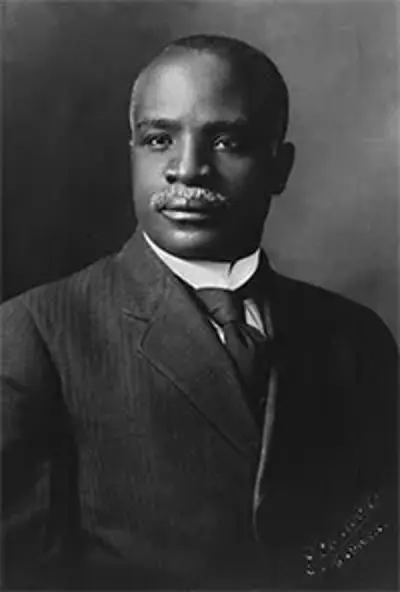
Kelly Miller was an American mathematician, sociologist, essayist, newspaper columnist, author, and an important figure in the intellectual life of black America for close to half a century. He was known as "the Bard of the Potomac".
