Richard Nixon Quotes
Half the Democrats in Congress get elected by running for Civil Rights and the other half gets elected by running against Civil Rights.
At the time most of the racists in the country, especially in the South were Democrats. The liberal Republicans were in favor of Civil Rights along with most non Southern Democrats, but the very conservative Republicans were also opposed to Civil Rights. When Lyndon Johnson, pushed through the Civil Rights Act, the Southerners were furious at their Democratic party. The Conservative Republicans, seeing an opening, courted and pandered to the anti-civil rights Democratic members of Congress, and promised minimal civil rights enforcement. Soon almost all the Southern Democrats became Republicans and the Democratic Party was weakened at the Presidential level and the new conservative Republicans shifted American politics until Bill Clinton and Barack Obama with Congressional Democratic majorities regained power. Nixon’s accurate observation about the Democrats began to be true for the Republicans while the Democratic party no longer had a civil rights struggle every time the party developed a platform or had a convention.
Richard M. Nixon, 1913-1994, 37th President of the United States (Republican, CA), Quoted on PBS News Hour, November 4, 2008
Sourced by: Eigen's Political and Historical Quotations


Prior to Johnson’s civil rights efforts, the South virtually always voted for Democrats in all elections. The only political competition was for the Democratic Party Primaries. The term “Solid South” meant that it was solid for the Democratic Party. But after the Civil Rights Act was passed in 1964, the racist whites who used to be Democrats switched and joined the genuine traditional conservative and created a Republican Southern majority that was as solid for the GOP as the Democrats had ever enjoyed.


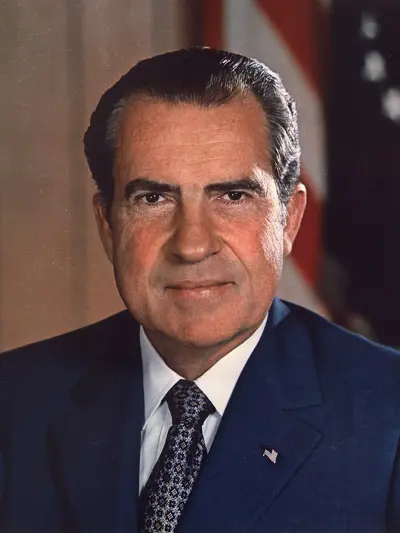
Richard Milhous Nixon was the 37th president of the United States, serving from 1969 to 1974. A member of the Republican Party, Nixon previously served as the 36th vice president from 1953 to 1961, having risen to national prominence as a representative and senator from California. After five years in the White House that saw the conclusion to the U.S. involvement in the Vietnam War, détente with the Soviet Union and China, and the establishment of the Environmental Protection Agency, he became the only president to resign from the office, following the Watergate scandal.
