Robert Finley Quotes
Free Blacks are unfavorable to our industry and morals.
He and other founders believed that Blacks freed from slavery would still suppress wages for whites and hurt industry. The possibility of intermarriage was also viewed as a moral degeneration. Approximately 15,000 Blacks chose to emigrate.
Robert Finley, 1772–1817, Presbyterian Minister & Founder of the American Colonization Society, President, University of Georgia, His major reasons for forming the American Colonization Society
Sourced by: Eigen's Political and Historical Quotations

Incredibly enough, after the Civil War and emancipation, most Virginia leaders opposed any form of rights for Blacks with one of the major reasons being that they were ignorant and uneducated. It was actually a crime to teach even a free Black to read.

In never occurred to him that he and his family were also adverse to the backbreaking stoop labor of cotton picking.

This quotation shows two important historical facts about Southern Racism. The first is now great the social pressures were against any white who would try and alter the status quo. The second was that none the less there have always been whites in the South who, despite the great social penalties, did the right thing and not only improved the situation, but more important, made most Americans realize that Southerners were not all racists any more than all of any group had any negative behavior.

Although most American slaves were used in agriculture, the myth that Blacks were only fit for manual labor was debunked very early in American history. Despite that , it persisted to some racists to this day. The key then, as today, was education and training.

Grady, a Georgian, prompted himself as a spokesman for the “New South” and while he did no advocate slavery and the brutality that had been inflicted on Southern Negroes, he was a strong white supremacist as this quotation demonstrates. He was only “liberal” compared with the total revanchist racists. However, when in the North he spoke kindly about the Negro. See Quotation 643652.


Johnson was then Vice President.

Captain W.W. Polk, commanding the Coast Guard revenue cutter Florida, wrote Treasury Secretary asking permission to employ a young Negro on board. Existing regulations prohibited such. The Negro in question was a free Black born in New York who was an “expert sailor for his age and competent to the duty of a boy of the first class.” Polk had hired the boy as a servant after he had worked at sea for another Captain. Good seamen were hard to come by, decision was extremely contentious. Ingham “compromised” by limiting the allowable role of Negroes at sea—a practice that lasted till the Second World War.
At a Senate Judiciary Committee hearing, he was told by a senator to lower his voice.

At the time Thomas was the Chairman of the Equal Employment Opportunity Commission. In an informal discussion among some of the staff, a white employee was describing the difficulty he had encountered trying to get a bank loan. This quotation illustrates that Thomas has had an antipathy to affirmative action and racial programming or preferences well before he was appointed to the Appellate and later the Supreme Court.


At the time, American racism was rampant, and about 150 Blacks were lynched each year with no punishment for the murderers. The heavyweight boxing champion of the world was a major hero, and the thought of a Black possibly winning the title was unthinkable.


This painting depicted a young black girl walking to school surrounded by 4 U. S. Marshalls protecting her from the crowd of white racists trying to prevent her from attending an elementary school under court order. The vicious race hatred that school integration revealed was the national problem that was then surfacing. The graphic is the illustration that appeared in Look with that name.


Smith, an extreme racist, was so rabid that MacGregor was supporting the Civil Rights Bill, he followed him off the House floor to make this statement. MacGregor jokingly told Smith that he was wrong. He had 17 Negroes in his District.


This quotation has been one that has been used to argue against Black and other minority racism as well as white racism.

The reason for secession was the threat to slavery, which was a great threat to the slave-owners of the South. However, the non slave-owners had a very strong vested interest in maintaining slavery in that most Southerners had been brought up with such a negative view of Blacks that they were paranoid of Black equality or even worse some Blacks in positions of authority over whites. At the time, it was the Republican Party that was the advocate for minority equality and the Democratic Party embraced the racists. The parties would flip flop after the Civil Rights Act of 1964 ending legal segregation was passed by a Democratic President and a Democratic Majority Congress.
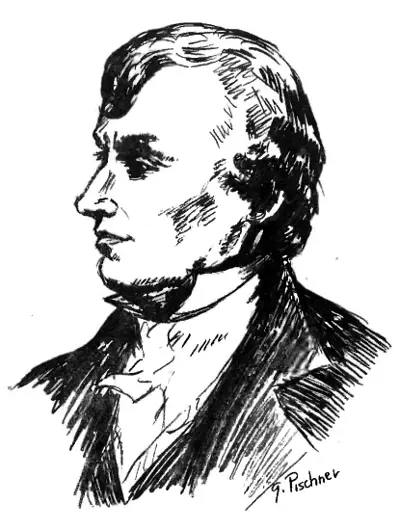
Robert Finley was an American clergyman and educator who is known as one of the founders of the American Colonization Society, which established the colony of Liberia in West Africa as a place for free American Blacks.
