W. E. B. Du Bois Quotes
For the Negro, Andrew Johnson did less than nothing when once he realized that the chief beneficiary of labor and economic reform in the South would be freedmen. His inability to picture Negroes as men made him oppose efforts to give them land; oppose national efforts to educate them; and above all things, oppose their rights to vote.
Du Bois, W. E. B. Black Reconstruction in America, 1860-1880. Harcourt, Brace and Company, 1935.

In the South racism was so extensive that Blacks were not allowed to even vote. Brooke had moved from the South to Massachusetts and there as in the North, Midwest and West, African Americans could vote. So the first time Brooke ever voted he was a candidate.


He was the Russian Reformer who ended serfdom and gave land to the peasants and then was assassinated. Ironically, both Alexander II and Lincoln were assassinated—because of their reform efforts—Lincoln for going too far; the Czar for not going far enough. See the Nickname that was given to the Czar: {622809}.

Blacks were fighting and dying in WWII. They were equal when they were under fire, but otherwise not. The war was against fascist protagonists whose creed was inequality while the allies were upholding freedom and equality. But making that aspiration a reality was difficult.


He was right. Even the vaunted Southern Filibuster was broken by the strategy and tactics Johnson and Senator Humbert Humphry, the Floor Leader for the 1964 Civil Rights Bill.


The large majority of the American people opposed legal segregation and for years, the segregationist, racist, Southern white minority were able to prevent any Civil Rights legislation by using the filibuster until President Lyndon Johnson, formerly a Southern Senator who understood the legislative process better than any other American president used his great skill to pass Civil Rights legislation instead of opposing it which he had done for years as a Texas Senator and the Majority Leader of the Senate.


Eight years and a Civil War later, he had changed his mind and was the sponsor of the Civil Rights Act of 1866—the first Federal civil rights law in America. See {587711}.

Newsletter of the United Sons of Confederate Veterans


Southerners and some others wanted to discriminate and fought civil rights legislation. The excuse they gave for opposition was that the Federal Government was usurping the power of the states to determine what civil rights people of the state would have. Shellabarger made it clear that the civil rights bill would not require ANY rights to be given. It just required that if the states granted rights, they could not discriminate by race as to those rights. But the states were free to decide which rights all citizens of the state would have. See {623473} .


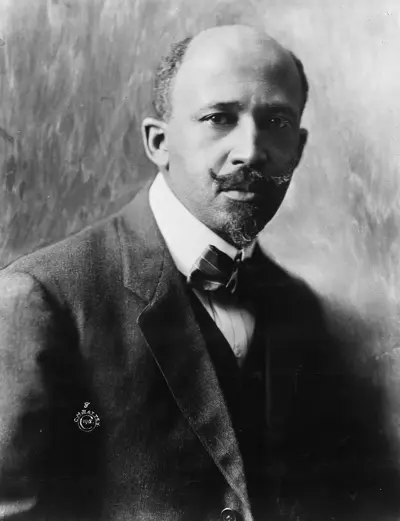
William Edward Burghardt Du Bois was an American sociologist, socialist, historian, and Pan-Africanist civil rights activist. Born in Great Barrington, Massachusetts, Du Bois grew up in a relatively tolerant and integrated community. After completing graduate work at the Friedrich Wilhelm University (in Berlin, Germany) and Harvard University, where he was the first African American to earn a doctorate, he became a professor of history, sociology, and economics at Atlanta University. Du Bois was one of the founders of the National Association for the Advancement of Colored People (NAACP) in 1909.
