Charlemagne Quotes
Every monastery and every abbey shall have its school in which boys may be taught…. No charges may be assessed against the pupils. .
Charles I, Charles the Great. By putting these ideas into the Frankish legal system Charlemagne established the basis of the free public school system, but used the Roman Catholic clerics to do the teaching as they were de facto the only educated group who could teach. This capitulary later was referred to as Charlemagne’s “Charter of Modern Thought”.
Charlemagne, ~720–772, King of the Franks, Capitulary (Frankish Collection of Laws and Administrative Procedures), 787
Sourced by: Eigen's Political and Historical Quotations


This book is endorsed by major religious organizations of all faiths as well as National School Boards Association, National Education Association, National PTA, National Association of Secondary School Principals, National Association of Elementary School Principals, American Association of School Administrators and others. It is used as a guideline by most schools systems in the United States.


It did not pass. Smalls had a hand in re-writing the Constitution of the State into which he had been born into slavery.

Badillo critics observe that the parochial schools have one huge advantage over the public shools. Then can select their students both before admission or after by expelling students. Public schools have very little flexibility and freedom to control their own student bodies.


Alabama. Mississippi and the other states of the South have from the inception of the nation had a much poorer educational system (often no system at all). Even when Jim Crow discrimination was rampant in the South, the white schools were very poor and the Black schools terrible. At the end of the 20th century after integration, there were more serious attempts to improve education in the South and progress is being made to reach parity with the rest of the country. However, there is still in many Southern school boards hostility to science and other aspects of modern education and Southern states tend to censor school texts and library books this weakening the educational system. But progress is being made.

In many eras in many countries, there have been major complaints about the quality of the pre-college education. This statement is typical of many made in 2010 America about the public schools. The term “public schools” in Engand refers to what we call private schools. In 1830, there were few pubic schools in the American sense of free, government operated schools.

There are two things that make this quotation interesting, First it tells us about the educational gender discrimination in early Massachusetts. But not his phrase “light soon broke in”. He obviously saw the lack of education for girls as undesirable and unenlightened. But the fact that he had this attitude and would express is so readily in 1857 tells us that, at least in the Northeast girls’ education was assumed by many as part of civilized society.

The reform bill was developed by the then current Minister of Education who views were quite opposite to Corkey’s. One of the reforms was to eliminate the Bible Teaching and other religious instructions in the public schools. Then these other undesirables would enroll in the public schools whereas before, the Protestants were able to operate segregated public schools where very few Catholics would attend. The religious bigotry by the Catholics in the South of Ireland was equaled if not exceeded by that of the Protestants in Northern Ireland.


In that era the favoritism of the government—especially state and local government—in favor of the of the Protestant Christians. Politicians started challenging the clear unconstitutional favoritism. The reformers were Republicans often referred to by the Democrats as “Godless Republicans”. A century later the Republicans would oppose strict separation of church and state with the Southerners and Fundamentalist Christians in their party and the Democrats fighting to maintain strict separation of church and state.

This plank if ever actually implemented would clearly destroy the American educational system. Extreme radical ideas such as this are not typical of Libertarian Party positions before or afterwards. The quotation illustrates that there are people in America who would end public education if they could. The quotation also illustrates how a small cadre of people can capture control of a political party and create a platform that is their own personal views which may be different from most of the party members or the historical position that the party has taken. In 1980 the Libertarian Party Vice Presidential Candidate was David Koch, one half of the billionaire conservative Koch brothers. Their money financed the Libertarian Party in that year and David Koch’s views then prevailed in the party platform. Historically, the Koch brothers moved from a minor third party to the Republican party at the beginning of the 21st century when their money was able to help drive the party very far to the right from the traditions of Abraham Lincoln and Theodore Roosevelt.

The counter-argument given by many of the left and the right is what while they contribute, they displace American citizens from these opportunities.


The Freedmen’s Bureau was an institution established after the Civil War to provide assistance to the newly emancipated and free slaves. Every constructive step taken by the Bureau was opposed and obstructed by “unreconstructed” Southerners and some Northerners. They had very limited resources and there was little known technically about how to accomplish their mission. However, tens of thousands of individual new freed Negroes profited immensely and there were some systemic successes such as Du Bois describes in this quotation. There were also some failures he believed—See Quotation 643645.


Arguing that Slavery inhibited a society from development ...
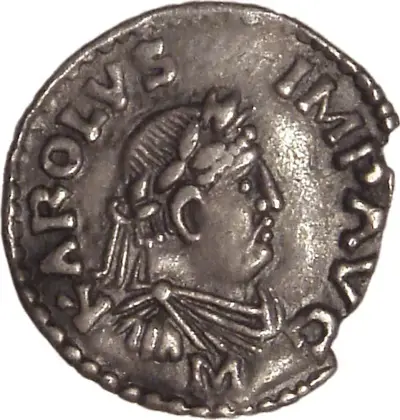
Charlemagne (English: /ˈʃɑːrləmeɪn, ˌʃɑːrləˈmeɪn/; French: [ʃaʁləmaɲ]) or Charles the Great; from the Latin Carolus Magnus, numbered Charles I, was the King of the Franks from 768, the King of the Lombards from 774, and the Emperor of the Romans from 800. During the Early Middle Ages, he united the majority of western and central Europe. He was the first recognised emperor to rule from western Europe since the fall of the Western Roman Empire around three centuries earlier. The expanded Frankish state that Charlemagne founded is called the Carolingian Empire. He was later canonised by Antipope Paschal III.
