Herman Badillo Quotes
The reasons that parochial schools are generally better than the public schools is that the parochial schools have two things that the public schools do not have: Discipline and Standards.
Badillo critics observe that the parochial schools have one huge advantage over the public shools. Then can select their students both before admission or after by expelling students. Public schools have very little flexibility and freedom to control their own student bodies.
Herman Badillo, U. S. Congressman (Democrat, NY), First Puerto Rican Congressman in the United States, Deputy Mayor of New York City, Bronx Borough President, Chancellor of the University of the City of New York, Speech, Manhattan Institute, New York City, January 9, 2007
Sourced by: Eigen's Political and Historical Quotations


Liberia had been founded by American Free Negroes. American religious missionary organizations were very helpful in building the new nation, but they also created their own parochial, religious day schools. And behind the scenes they blocked efforts to establish a public school system. Walker, in America, was trying to get public support for allowing there to be public schools in Liberia.

This educational dominance by Islamic religion is not the case in all Muslim nations. Turkey has a completely secular curriculum, and Indonesia, the largest Muslim nation, has a balanced curriculum with modern subjects taught. Saudi Arabia and Pakistan are at the other end of the spectrum.


This was his explanation of why so many school board bond issues are voted down. Others point out that this happens in communities where faith has not been lost but the citizens simply do not think the community can afford the expense or the effect on the community’s credit rating.

Oliver was a right wing, racist, fanatic and extremist. His quotations are interesting because he often said in public what many right wing extremists only said in private. Paranoia and conspiracy theories were common with the extremists, then as now. In this case, they actually believed that Communists had infiltrated and taken over the 30,000 different school districts in the United States.


Everett was to become the President of Harvard. Private universities had been established by a single religion and typically had professorships of clergy of their religion, but when public universities were contemplated, new thinking was needed in the light of the American Constitution. Madison’s suggested solution is the one that America pursued. Separate the theological seminaries from the public universities.


In many eras in many countries, there have been major complaints about the quality of the pre-college education. This statement is typical of many made in 2010 America about the public schools. The term “public schools” in Engand refers to what we call private schools. In 1830, there were few pubic schools in the American sense of free, government operated schools.

In the city of Narragansett, RI, there Lester York had each Christmas season dressed up as St Nicholas, 4TH century Catholic Bishop, the precursor to Santa Clause. He played the part of the Bishop and discussed Christmas in that context. The presentation was very educational as students could learn of the culture of that time but they also received an authentic religious sermon of the time. By inviting York into the public elementary schools, the students were learning some history and culture but they were also involved in a religious service and doctrine—the divinity of Christ. The former was good; the latter illegal as the public schools were in addition to educating historically communicating religious messages. York’s presentations had many supporters who had argued that York’s presentation conveyed Christian messages very well and children should not be denied that opportunity. After much community discussion, the public schools withdrew their invitation to York, and he gave his excellent presentation in many community churches.


Holland, very early had a public school system, and abolished religious instruction in those schools and relegating that to Sunday Schools and home religious instruction.

In that era the favoritism of the government—especially state and local government—in favor of the of the Protestant Christians. Politicians started challenging the clear unconstitutional favoritism. The reformers were Republicans often referred to by the Democrats as “Godless Republicans”. A century later the Republicans would oppose strict separation of church and state with the Southerners and Fundamentalist Christians in their party and the Democrats fighting to maintain strict separation of church and state.

This plank if ever actually implemented would clearly destroy the American educational system. Extreme radical ideas such as this are not typical of Libertarian Party positions before or afterwards. The quotation illustrates that there are people in America who would end public education if they could. The quotation also illustrates how a small cadre of people can capture control of a political party and create a platform that is their own personal views which may be different from most of the party members or the historical position that the party has taken. In 1980 the Libertarian Party Vice Presidential Candidate was David Koch, one half of the billionaire conservative Koch brothers. Their money financed the Libertarian Party in that year and David Koch’s views then prevailed in the party platform. Historically, the Koch brothers moved from a minor third party to the Republican party at the beginning of the 21st century when their money was able to help drive the party very far to the right from the traditions of Abraham Lincoln and Theodore Roosevelt.


Similar formal opposition to Jewish parochial schools was more formally voiced later—see American Council for Judaism.
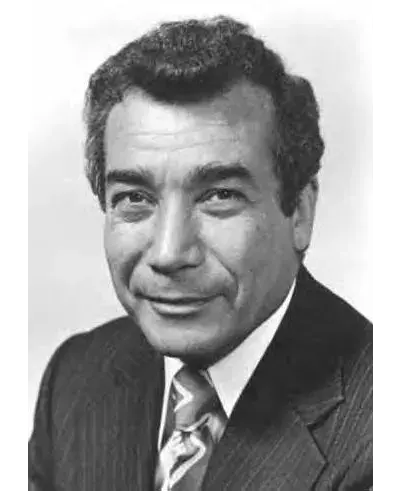
Herman Badillo was a Puerto Rican politician who served as borough president of The Bronx and United States Representative, and ran for Mayor of New York City. He was the first Puerto Rican elected to these posts, and the first Puerto Rican mayoral candidate in a major city in the continental United States.
