Diane Ravitch Quotes
More than any other institution in American life, the public schools have broken down the barriers of class, race, religion, gender, ethnicity, language and disability status that separate people.
Diane Ravitch, Assistant Secretary of Education, “Saving Our Public Schools”, The Progressive, October 2013
Sourced by: Eigen's Political and Historical Quotations


The reform bill was developed by the then current Minister of Education who views were quite opposite to Corkey’s. One of the reforms was to eliminate the Bible Teaching and other religious instructions in the public schools. Then these other undesirables would enroll in the public schools whereas before, the Protestants were able to operate segregated public schools where very few Catholics would attend. The religious bigotry by the Catholics in the South of Ireland was equaled if not exceeded by that of the Protestants in Northern Ireland.

This is a terrific statement of Americanism at any time, but it is particularly notable in 1888. At that time anti-Catholicism and anti-Semitism were both heavy throughout the country. Jim Crowe and racism was rampant, Orientals were heavily discriminated against especially on the West Coast. Irish and Italians were not wanted in most of America except as manual laborers.

He was the first FHA administrator to make statements saying that non-discriminatory housing services should be available to the American people. At the time the Southern states had laws allowing and protecting legal segregation especially in housing. The Southern field staff interpreted his instruction to be sure that both blacks and whites had access to FHA services, but they used the “separate but equal” doctrine: Provide services to both races but always in segregated housing projects. This was typical of the kinds of problems that motivated the Civil Rights Acts offered by President Kennedy in 1963 and passed by President Johnson in 1964. See {637272} for a similar Mason statement.
Between French and English origin Canadians.
There are two things that make this quotation interesting, First it tells us about the educational gender discrimination in early Massachusetts. But not his phrase “light soon broke in”. He obviously saw the lack of education for girls as undesirable and unenlightened. But the fact that he had this attitude and would express is so readily in 1857 tells us that, at least in the Northeast girls’ education was assumed by many as part of civilized society.


The trial convicted a teacher, Scopes, of the “crime” of teaching the theory of evolution in a school.


He was the first FHA administrator to make statements saying that non-discriminatory housing services should be available to the American people. He was not able to change the agency’s equal opportunity performance because the Southern states had laws allowing and protecting legal segregation especially in housing. The Southern staff interpreted his position to be sure that both blacks and whites had access to FHA services, but they used the “separate but equal” doctrine: Provide services to both races but always in segregated housing projects. This was typical of the kinds of problems that motivated the Civil Rights Acts offered by President Kennedy in 1963 and passed by President Johnson in 1964 See {637271} for a similar Mason statement.

Bilbo was one of the worst racists who ever served in the Congress.


Oliver was a right wing, racist, fanatic and extremist. His quotations are interesting because he often said in public what many right wing extremists only said in private. Paranoia and conspiracy theories were common with the extremists, then as now. In this case, they actually believed that Communists had infiltrated and taken over the 30,000 different school districts in the United States.


He was reacting to the racial claims of Adolph Hitler in German


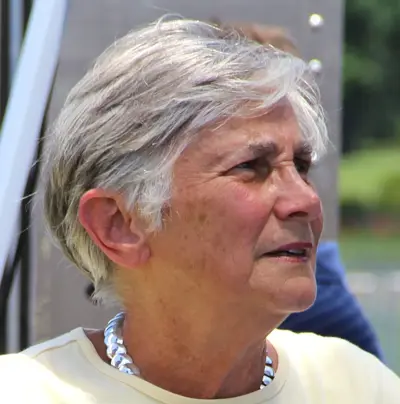
Diane Silvers Ravitch is a historian of education, an educational policy analyst, and a research professor at New York University's Steinhardt School of Culture, Education, and Human Development. Previously, she was a U.S. Assistant Secretary of Education. In 2010, she became "an activist on behalf of public schools". Her blog at DianeRavitch.net has received more than 36 million page views since she began blogging in 2012. Ravitch writes for the New York Review of Books.
