Henry Cabot Lodge Quotes
The American idea is a free church in a free state, and a free and unsectarian public school in every ward and every village with its door wide open to children of all races and every creed.
Henry Cabot Lodge, 1850-1924, U. S. Senator (Republican, MA), 1888
Sourced by: Eigen's Political and Historical Quotations

At the time he made this speech it was very radical. School segregation was not only legal but was required by law in the Southern states. This was a huge slap in the face of the South which had undermined the gains of Reconstruction. It did not however hurt his future political career in the North. At the time it was the Republicans who were the champions of desegregation and equality and most racists in the country were Democrats. One hundred years later, it was the other way around. Most racists affiliated with the Republican Party and it was the Democrats who advocated strong anti-discriminatory measures.
This is a terrific statement of Americanism at any time, but it is particularly notable in 1888. At that time anti-Catholicism and anti-Semitism were both heavy throughout the country. Jim Crowe and racism was rampant, Orientals were heavily discriminated against especially on the West Coast. Irish and Italians were not wanted in most of America except as manual laborers.

JOAM was a nativist workingmen's organization founded in 1853 to resist the competition for jobs from immigration. See {584649} for an example. At its peak it had over 200,000 members.
This book is endorsed by major religious organizations of all faiths as well as National School Boards Association, National Education Association, National PTA, National Association of Secondary School Principals, National Association of Elementary School Principals, American Association of School Administrators and others. It is used as a guideline by most schools systems in the United States.

The reform bill was developed by the then current Minister of Education who views were quite opposite to Corkey’s. One of the reforms was to eliminate the Bible Teaching and other religious instructions in the public schools. Then these other undesirables would enroll in the public schools whereas before, the Protestants were able to operate segregated public schools where very few Catholics would attend. The religious bigotry by the Catholics in the South of Ireland was equaled if not exceeded by that of the Protestants in Northern Ireland.

He was the first FHA administrator to make statements saying that non-discriminatory housing services should be available to the American people. At the time the Southern states had laws allowing and protecting legal segregation especially in housing. The Southern field staff interpreted his instruction to be sure that both blacks and whites had access to FHA services, but they used the “separate but equal” doctrine: Provide services to both races but always in segregated housing projects. This was typical of the kinds of problems that motivated the Civil Rights Acts offered by President Kennedy in 1963 and passed by President Johnson in 1964. See {637272} for a similar Mason statement.


Dewey was opposing the concept of “released time” from the public schools for religious instruction.


Rhode Island was known for its religious tolerance since the founders left Massachusetts after being persecuted by the Puritans. However, this was a remarkable policy for its time. Brown was a Baptist school and the President was a Baptist Minister, yet other Protestant denominations, Catholics, Jews were all welcome to attend. The toleration however did not extend to atheists. See {82626} .

Similar formal opposition to Jewish parochial schools was more formally voiced later—see American Council for Judaism.


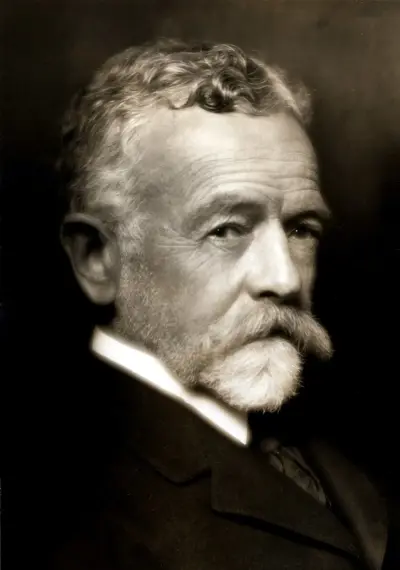
Henry Cabot Lodge was an American Republican politician, historian, and statesman from Massachusetts. He served in the United States Senate from 1893 to 1924 and is best known for his positions on foreign policy. His successful crusade against Woodrow Wilson's Treaty of Versailles ensured that the United States never joined the League of Nations and his reservations against that treaty influenced the structure of the modern United Nations.
