Victor Cousin Quotes
I have seen no primary schools worthy to be compared, even now, with those of Holland.
Holland, very early had a public school system, and abolished religious instruction in those schools and relegating that to Sunday Schools and home religious instruction.
Victor Cousin, 1792–1867, French Philosopher & Educational Policy Advisor to the Government, 1833
Sourced by: Eigen's Political and Historical Quotations


Badillo critics observe that the parochial schools have one huge advantage over the public shools. Then can select their students both before admission or after by expelling students. Public schools have very little flexibility and freedom to control their own student bodies.

Essentially a State of the Nation presentation. After the French Revolution there was huge pressure to produce equal education for all classes. Examinations were the means by which the revolutionary government attempted to assure educational quality. But with the emphasis on examinations, other aspects of the French curriculum degenerated. One of Napoleon’s first reforms was to deemphasize testing and bring back the emphasis on creativity and other aspects of education. There are some who see a parallel between the testing after the French Revolution and that of the George W. Bush administration—“No Child Left Behind”—to be well-intentioned but detrimental to the overall quality of education for the nation.

In many eras in many countries, there have been major complaints about the quality of the pre-college education. This statement is typical of many made in 2010 America about the public schools. The term “public schools” in Engand refers to what we call private schools. In 1830, there were few pubic schools in the American sense of free, government operated schools.


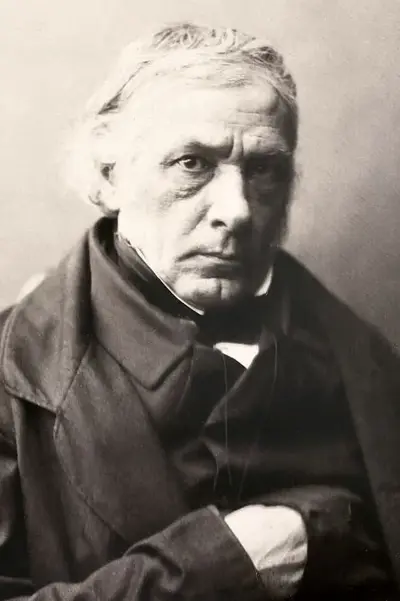
Victor Cousin was a French philosopher. He was the founder of "eclecticism", a briefly influential school of French philosophy that combined elements of German idealism and Scottish Common Sense Realism. As the administrator of public instruction for over a decade, Cousin also had an important influence on French educational policy.
