Napoleon Bonaparte Quotes
New schools are being opened, and inspectors have been appointed to see that the instruction does not degenerate into vain and sterile examinations…there can be no doubt that French genius will produce works of distinction
Essentially a State of the Nation presentation. After the French Revolution there was huge pressure to produce equal education for all classes. Examinations were the means by which the revolutionary government attempted to assure educational quality. But with the emphasis on examinations, other aspects of the French curriculum degenerated. One of Napoleon’s first reforms was to deemphasize testing and bring back the emphasis on creativity and other aspects of education. There are some who see a parallel between the testing after the French Revolution and that of the George W. Bush administration—“No Child Left Behind”—to be well-intentioned but detrimental to the overall quality of education for the nation.
Napoleon Bonaparte, 1769-1821, [Napoleon Bonaparte], Military leader and Emperor of France, Account of the Internal Situation of France Statement which he presented to the Legislative Body, December 31, 1804
Sourced by: Eigen's Political and Historical Quotations


To many Republicans and conservatives this view was heresy, especially coming from a leader of the Party that wanted to abolish the Federal Department of Education and leave education to the states and local communities. The culture of which he complains, others, left and right, considered virtuous and good educational policy. In actuality there have been educational standards for years for most schools and states like New York have had states wide exams. Paige and others wanted Federal Standards which were implemented and the nation had to contend with States and School districts who cheated to avoid the harsh penalties. Meanwhile American citizens are less satisfied with public schools than ever despite the fact that America has some of the best schools in the world.

Jinnah’s vision was for a modern educational system and curriculum throughout Pakistan. He would not have recognized the religious madrassas that taught only the Koran and Islamic subjects that became so prevalent in Pakistan by the 21st century.

The Governor had just ordered the withdrawal of the State from the “Common Core” national educational standards and testing program. Louisiana has always had a relatively poor education system and the test scores of Louisiana Students were very poor compared with students from other states. However, this was embarrassing, and instead of trying to improve the education in the State, the Governor wanted the State to have their own tests so they could lower the standards and appear to have better results in percentage of students passing. The State Superintendent of Education, however, claimed the Governor did not have the authority to withdraw from the common core, and a political and legal battle began.

L. P. Jacks. Since this quotation education the world over has vastly improved. However arguably, the reasons were not ethics of nations and their leaders but a combination of public demand and the clear coupling of education with necessary qualifications for jobs and scientific and technological development of nations.

Holland, very early had a public school system, and abolished religious instruction in those schools and relegating that to Sunday Schools and home religious instruction.


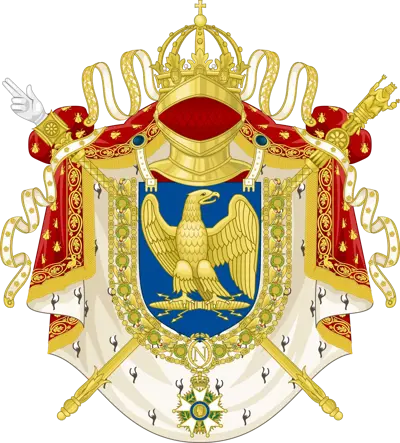
Napoléon Bonaparte was a French military and political leader of Corsican descent. He rose to prominence during the French Revolution and led several successful campaigns during the Revolutionary Wars. As Napoleon I, he was Emperor of the French from 1804 until 1814, and again in 1815. Napoleon dominated European and global affairs for more than a decade while leading France against a series of coalitions in the Napoleonic Wars. He won most of these wars and the vast majority of his battles, building a large empire that ruled over continental Europe before its final collapse in 1815. One of the greatest commanders in history, his wars and campaigns are studied at military schools worldwide. He remains one of the most celebrated and controversial political figures in human history.
