John Stuart Mill Quotes
Every man who says frankly and fully what he thinks is so far doing a public service. We should be grateful to him for attacking most unsparingly our most cherished opinions.
Mill, John Stuart. "Grote's Plato." The Edinburgh Review, vol. 123, no. 252, Apr. 1866, p. 326.


In some universities would sometimes protest the selection of a commencement speaker and demonstrate. On some of these occasions the school administration withdrew the invitation. In addition to the problem described by Beckel, the university sells out its basic intellectual commitment to hear all ideas and points of view—regardless of how repugnant or evil. Commencement speakers tend to create a bigger problem because of the custom of the university granting the speaker an Honorary Degree. Whereas it is against the academic tradition to censor a speaker and having a speaker does NOT associate the University, the faculty or the students with the views of the speaker. But the granting of the Honorary Degree does imply an institutional approval and admiration of the speaker, and that is fair game for student protest. However in the beginning of the 21st century some extreme left wing students succeeded in intimidating spineless university administrators and trustees into censoring speech and the ideas of the speaker. This was typical behavior of the right wing brownshirts of the 1930s when it was the Fascists who were prohibiting certain speakers—usually left wingers. 80 years later it was the left wing extremists engaging in this undemocratic behavior.

She was dealing with a serious campus situation where an invited speaker, Chief of Police Kelly of New York City was prevented from giving his p resentation on the controversial “Stop and Frisk” rules by student protesters who opposed the practice. Brown’s tradition of hearing anyone on the campus regardless of point of view had been broken to the distress of most students, faculty and alumni.

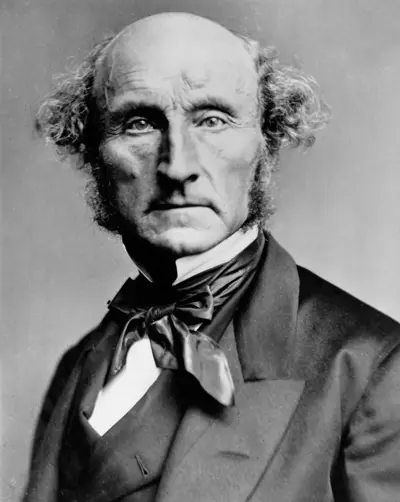
John Stuart Mill, usually cited as J. S. Mill, was an English philosopher, political economist, Member of Parliament, and civil servant. One of the most influential thinkers in the history of classical liberalism, he contributed widely to social theory, political theory, and political economy. Dubbed "the most influential English-speaking philosopher of the nineteenth century", he conceived of liberty as justifying the freedom of the individual in opposition to unlimited state and social control.
