Sydney Smith Quotes
Every law which originated in ignorance and malice, and gratifies the passions from whence it sprang, we call the wisdom of our ancestors: when such laws are repealed, they will be cruelty and madness;
Sydney Smith, 1771-1845, English Clergyman & Essayist, Letter V, Peter Plymley's Letters, 1808
Sourced by: Eigen's Political and Historical Quotations


See Ulysses S. Grant for a similar American view that very year.

Doty acquitted Chief Oshkosh who had murdered another Indian in retaliation of the murder of one of his tribe. Under the Indian customs of the time, revenge killings were normal and expected. The white citizens were outraged and voted Wisconsin’s first judge out of office. He later became Governor of the territory and when Wisconsin became a state, Doty became its Congressman.


Ignorant political opposition to new scientific findings has been characteristic of some of the politicians in most governments in most eras.


Both Puritans and Quakers were persecuted and physically abused in England by the Anglican Church. The Puritans as soon as they became dominant in part of the American colonies began persecuting Quakers. The Quakers who were the majority in the Pennsylvania colony, however were tolerant of other religions. This history was another of the many reasons the Founding Fathers wanted no established church. A “scorpion” was a type of whip that was particularly painful.


Niemoller, a World War I U-boat commander and clergyman, was jailed for rejecting the National Socialist ideology and for appealing to German Christians not to embrace the new paganism. He was visited in prison by a fellow pastor who expressed surprise at seeing him behind bars.


What is fascinating about this quotation is that although the head of a religion, Smith was not advocating the kinds of personal lifestyles of his church the way modern religious leaders do, but was concerned with the much larger issues of expansionism, corruption of the courts and judiciary, and land distribution. He was a classic reform candidate in that sense. Smith had written to most of the then likely Presidential candidates of both major parties asking for their position on the Mormons who were facing persecution wherever they went. None of the politicians would make any satisfactory commitments. Smith took Direct Action and became the only major religious official to have run for the Presidency of the United States until Pat Robertson tried and failed in 2000. Smith’s assassination shortly thereafter cut his run for the Presidency short before it made much headway and politically he had no chance to affect the race.
England, and most other countries of Europe, had put people who could not pay their debts in prison. When our founding fathers formed the constitution, they too saw debtors’ prison as an acceptable concept. 11 years earlier Congress had outlawed Federal Debtors’ Prisons. However many states and local governments then still had them. Smith wanted them abolished completely. What is fascinating about this quotation is that although the head of a religion, Smith was not advocating the kinds of personal lifestyle issues of his church the way modern religious leaders do, but was concerned with the much larger issues of expansionism, corruption of the courts and judiciary, and land distribution. He was a classic reform candidate in that sense. Smith had written to most of the then likely Presidential candidates of both major parties asking for their position on the Mormons who were facing persecution wherever they went. None of the politicians would make any satisfactory commitments. Smith took Direct Action and became the only major religious official to have run for the Presidency of the United States until Pat Robertson tried and failed in 2000. Smith’s assassination shortly thereafter cut his run for the Presidency short before it made much headway and politically he had no chance to affect the race.


“Catiff” is a Middle English term to describe a lowly, despicable person.


This quotation so impressed Thomas Jefferson that he wrote it in his Commonplace Book.

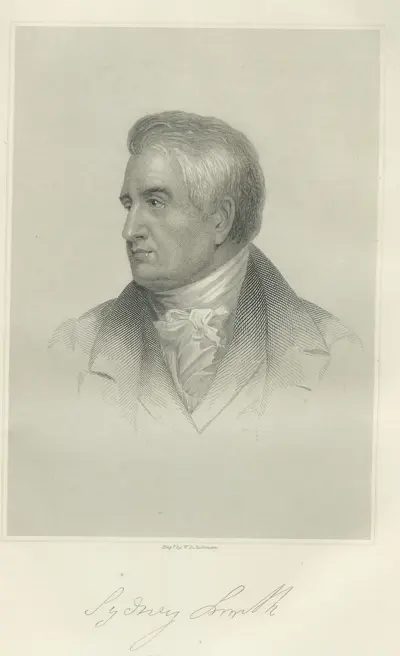
Sydney Smith was an English wit, writer and Anglican cleric.
