John Stuart Mill Quotes
The laws of most countries are far worse than the people who execute them, and many of them are only able to remain laws by being seldom or never carried into effect.
See Ulysses S. Grant for a similar American view that very year.
John Stuart Mill, 1806-1873, Member of Parliament, British Political Economist, The Subjugation of Women, 1869
Sourced by: Eigen's Political and Historical Quotations


The Senator was arguing against a bill to correct an aspect of the immigration law where infants and very young clildren are broght to the United States by parents who entered illegally. The children grow up in the United States—the only country and home that they have ever known. American law required that they be deported to “their countries” which they have no memory of and many do not even speak the language or know the culture. Sessions, is an example of the view that law defines justice. Therefore laws cannot be unjust nor can enforcing the law. Opponents point out that even in the United States we have, in earlier times, “enforced the law” which we came to regret and see as an injustice. The Fugitive slave laws, the Southern racial discrimination laws, and the law allowing Japanese American Citizens to be interned and lose their land during WWII are a few examples of laws, the enforcement of which is seen by most Americans as having been unjust. The execution of “witches” in early America was in conformity with the law.


Burke was referring to the American Colonists in the midst of the American Revolution.


The Egyptian Army, responding to huge demonstrations, ordered the Muslim Brotherhood President to step down in what appeared to be a coup d’etat. There was an American law that required a cut off of foreign aid to any government that had come to power. The American Administration and most of Congress did not want to terminate foreign aid to Egypt, and announced that it could not come to a conclusion as to whether or not there was a coup. They did not say that there was no coups—they just decided not to decide. Since there was no finding of a coups, there was no cutoff. Senator Paul and a few other Senators, observing that there had been a coup, wanted the administration to cut off the foreign aid even though it would be detrimental to our foreign policy. The government must obey the law they argued, regardless of the consequences.


Samuel Langhorne Clemens, 1835-1910


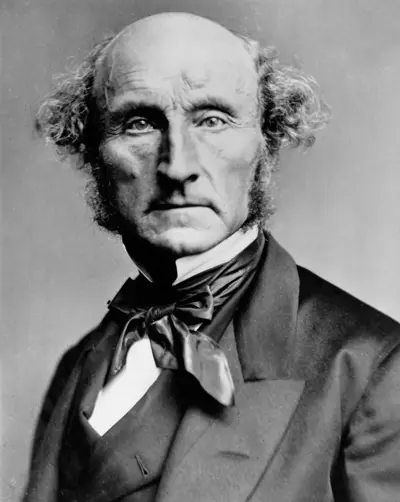
John Stuart Mill, usually cited as J. S. Mill, was an English philosopher, political economist, Member of Parliament, and civil servant. One of the most influential thinkers in the history of classical liberalism, he contributed widely to social theory, political theory, and political economy. Dubbed "the most influential English-speaking philosopher of the nineteenth century", he conceived of liberty as justifying the freedom of the individual in opposition to unlimited state and social control.
