Lin Yutang Quotes
When there are too many policemen, there can be no liberty. When there are too many soldiers, there can be no peace. When there are too many lawyers, there can be no justice.
Lin Yutang, 1895–1976, Chinese Writer & Philosopher, Quoted in James Alexander, The World's Funniest Laws, 2005
Sourced by: Eigen's Political and Historical Quotations


The General Court was then the legislature.

In early America and up to WWII, generally it was the conservatives like Fisher who were opposed to a strong military and many wanted no military at all except in times of war. It was President Dwight Eisenhower who turned the right wing of America into a pro military force.

The article he wrote was the first serious plan and proposal to repeal Prohibition which was opposed by most people after the country had experienced the negative unintended consequents of making alcohol illegal. This was not unlike the second thoughts that many Americans began to develop regarding the War on Drugs at the end of the 20th century. Many felt the good that prohibition did (it improved the nation’s healt) was not worth the bad that came with it (crime, corruption, police brutality, disrespect for the law.)

Although nether he or the Sultan had made vigorous efforts to stop the massacres, he had promised the world community that Turkey would see that justice was done (See {620596} ). However, there were a few tried and one governor of a province was hanged and a few others received short jail sentences. Talaat, the worst of The Young Turks regarding the genocide, escaped to Germany. But he was tracked by a surviving Armenian who assassinated Talaat. The assassin was acquitted by a sympathetic German court which ruled that the extermination of the assassin’s family had been so traumatic that temporary insanity relieved the assassin of criminal responsibility.


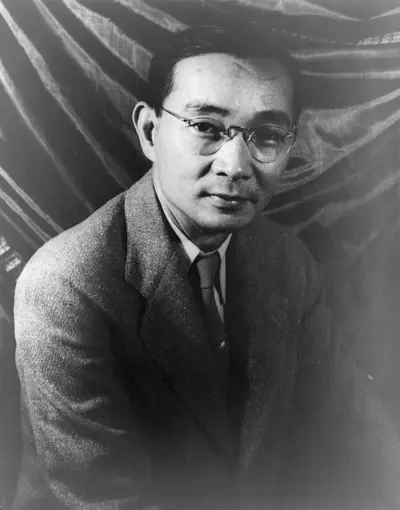
Lin Yutang was a Chinese inventor, linguist, novelist, philosopher, and translator. His informal but polished style in both Chinese and English made him one of the most influential writers of his generation, and his compilations and translations of classic Chinese texts into English were bestsellers in the West.
