Horace Gray Quotes
Every citizen or subject of another country, while domiciled here, is within the allegiance and the protection, and consequently subject to the jurisdiction, of the United States.
United States, Supreme Court. United States v. Wong Kim Ark. United States Reports, vol. 169, Government Printing Office, 1898, p. 693.


The 14th Amendment made the Black slaves and their families all citizens as most people know, but it had two other important aspects. It prohibited the individual states from deciding who who was and was not a citizen of the country and the state. In addition, it guaranteed that anyone born in the United States was a citizen regardless of the status of his parents—citizens or not, illegal immigrants or legal.


All foreign immigrants were welcome provided they would “renounce” their allegiance to an foreign ruler or religious leader. The latter was really directed at Roman Catholics. European history had many instances where the Pope and the Vatican plotted with different forces to produce armed rebellion in various states to maintain a Catholic Establishment. England and Ireland were both the subjects of Papal revolutionary initiatives and the Americans were well aware of it. Popes and cardinals had ordered good Catholics to take various political positions including what was treason and sedition. The fear of political control of American Catholics motivated the inclusion of Ecclesiastical renouncement to become a naturalized citizen. Also note that it was the States who controlled citizenship at that time and not the Federal Government.


The highest court in New York. At the time only U. S. citizens could own land. Since the majority of the population were farmers, this was a critical limitation with a major inducement to citizenship. Today, that motivation is no more, and critics of our immigration policy are concerned that there is no longer the desire and commitment to be American but just to make money from the American economy with a cultural and political allegiance elsewhere,
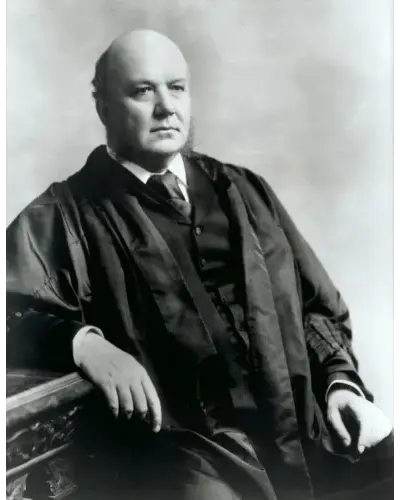
Horace Gray was an American jurist who served on the Massachusetts Supreme Judicial Court, and then on the United States Supreme Court, where he frequently interpreted the Constitution in ways that increased the powers of Congress. Noted for possessing a sharp mind and an enthusiasm for legal research, he was also a staunch supporter of the authority of precedent throughout his career.
