Charles A. Beard Quotes
Foreigners may be admitted to citizenship by naturalization, either collectively or individually. Collective naturalization may occur when a foreign territory and its inhabitants are transferred to the United States.
Beard, Charles A. American Government and Politics. Macmillan, 1910.


Surprisingly to most people, American Indians born in the United States were not automatically citizens until this law was passed making them so.


This was the first restriction on immigration and citizenship, and was at the time uniquely directed against Chinese.


Various elements of the 14th amendment were being debated. Language referred to “citizens” but many of the abolitionists and reconstructionists were concerned that the slavery forces in the Southern states would not provide protections to the Negro and the grounds that the were not citizens. As long as the states could define who was and was not a citizen, any of the equal protection clauses of the proposed 14TH Amendment could be evaded. Senator Howard then proposed this language which was accepted and became part of the Amendment. In modern times this particular clause was more relevant to the debate about immigration than to civil rights but originally the clause was included to make sure that Blacks would be citizens.


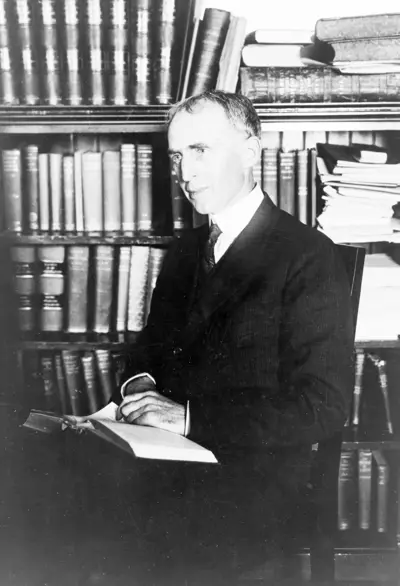
Charles Austin Beard was an American historian who wrote primarily during the first half of the 20th century. A history professor at Columbia University, Beard's influence is primarily due to his publications in the fields of history and political science. His works included a radical re-evaluation of the Founding Fathers of the United States, whom he believed to be more motivated by economics than by philosophical principles. Beard's most influential book, An Economic Interpretation of the Constitution of the United States (1913), has been the subject of great controversy ever since its publication. While it has been frequently criticized for its methodology and conclusions, it was responsible for a wide-ranging reinterpretation of American history of the founding era. He was also the co-author with his wife, Mary Beard, of The Rise of American Civilization (1927), which had a major influence on American historians.
