Wendell Willkie Quotes
Emancipation came to the colored race in America as a war measure. It was an act of military necessity. Manifestly it would have come without war, in the slower process of humanitarian reform and social enlightenment.
Willkie, Wendell L. One World. Simon and Schuster, 1943, p. 191.


Professor Egerton documents how successful Reconstruction was in radically changing the positions of Blacks in the South. He points out that it was so effective that a hate-filled, racist group of Southern White terrorists, with murder, arson, torture and intimidation took over many of the governments of the South while President Andrew Johnson, who although he believed in the Union, was himself an inveterate racist and opponent of emancipation, would not use the force of the Federal Government to bring the terrorists to justice. (The KKK leaders were known in every state and county). They successfully overthrew Reconstruction and set the process back by 100 years.

This Civil War recruiting poster was described by the Free Library of Philadelphia as “Civil War recruitment print targeting African Americans by evoking the freedoms granted by the Emancipation Proclamation. Depicts a montage of symbolic scenes centered around an African American Union soldier triumphantly holding up a sword and an American flag with the banner "Freedom to the Slave." He stands near broken shackles upon a tri-color flag adorned with a coiled snake. The flag is tugged upon by one of three joyous slaves freed by an African American soldier. Other scenes depict an African American man reading a newspaper on a rocking chair near a plow and child, African American children entering a "Public School" near a church, and a regiment of "U.S. Colored Troops" marching across a battlefield strewn with dead bodies.”


The “rupture and revolution” was Southern secession and the Civil War. This quotation is very important because it so clearly states the cause of the Civil War—the threat of the abolition or change of the institution of slavery. During the late 19th century and the first half of the 20th, many historical revisionists—in an effort to promote national unity—began stating and teaching that the cause of the rebellion was a philosophical difference over State’s rights and not something so banal as the greed for and immorality of the benefits of slavery. See {621370} for another Southern quotation illustrating this point.


The Act was passed by the Pennsylvania General Assembly whose clerk interestingly enough was Tom Paine.


It was in fact, the following year when the South rebelled to prevent a “settlement”, but the irony was that the Civil War brought the settlement—emancipation-- faster and on less favorable terms than had they not rebelled and let the political process end slavery gradually as the majority of the nation wanted and morality dictated.


Lincoln had promised amnesty to Southerners who would pledge loyalty to the Union. What many feared was that this would include slave owners re-enslaving their former "property," or that the government would allow them to do so in order to stop the rebellion.
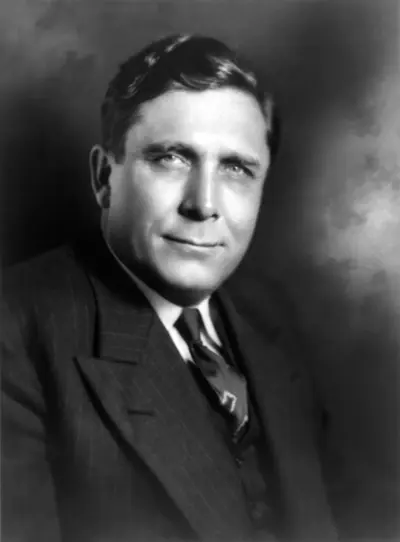
Wendell Lewis Willkie was an American lawyer, corporate executive, and the 1940 Republican nominee for President of the United States. Willkie appealed to many convention delegates as the Republican field's only interventionist: although the U.S. remained neutral prior to Pearl Harbor, he favored greater U.S. involvement in World War II to support Britain and other Allies. His Democratic opponent, incumbent President Franklin D. Roosevelt, won the 1940 election with about 55% of the popular vote and took the electoral college vote by a wide margin.
