Robert H. Jackson Quotes
Due process requires some definite link, some minimum connection, between a state and the person, property or transaction it seeks to tax.
Jackson, Robert H. Miller Bros. Co. v. Maryland, 347 U.S. 340, Supreme Court of the United States, 1954, pp. 344-345.


When Kansas was a territory and being considered for statehood, slavery was paramount politically in the nation and in Kansas in particular. There was terrible violence against “immigrants: from the East who would vote to make Kansas a free state and retaliation against the southerners and pro-slavery sympathizers. A constitutional convention was called in the town of Lecompton of the then Kansas Territory. The convention was dominated and controlled by slavery advocates and free soilers boycotted rather than give legitimacy to a constitution where they would lose. The quotation would settle the issue of slavery for Kansas the conferees thought. President Buchanan tried to steer the Lecompton Constitution through Congress, but there was enough opposition to block it. Congress decreed a Kansas referendum. The slavery forces lost and Kansas entered as a free state; there were 3 additional constitutional conventions which passed 3 different constitutions before one was settled upon.


Without this clause in our Constitution, State government and a Federal system would not work well. If one state did not have to recognize the acts and decisions of another, there would be no nation—just a loose amalgam of states.


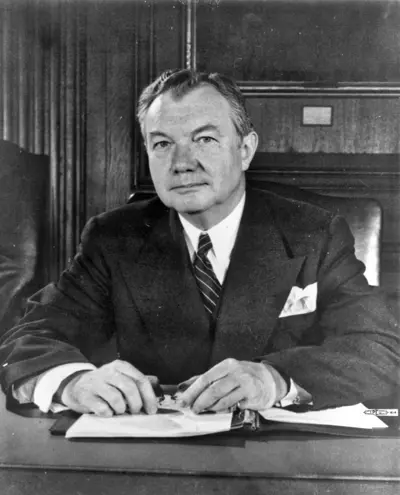
Robert Houghwout Jackson was an American attorney and judge who served as an Associate Justice of the United States Supreme Court. He had previously served as United States Solicitor General and United States Attorney General, and is the only person to have held all three of those offices. Jackson was also notable for his work as Chief United States Prosecutor at the Nuremberg trials of Nazi war criminals following World War II.
