Mao Zedong Quotes
"Don't you want to abolish state power?" Yes, we do, but not right now. We cannot do it yet. Why? Because imperialism still exists, because domestic reaction still exists, because classes still exist in our country. Our present task is to strengthen the people's state apparatus - mainly the people's army, the people's police and the people's courts - in order to consolidate national defense and protect the people's interests.
Mao, Zedong. "On the People's Democratic Dictatorship." Selected Works of Mao Tse-Tung, vol. 4, Foreign Languages Press, 1961, p. 418.

Mao and other Chinese leaders molded the people into an Army to fight the invading Japanese in WWII after which they were attacked by Chiang Kai-shek’s Nationalists. In a remarkable trek of escape the Communists moved across China to escape the nationalists while the Red Army provided protection. Without the Red Army, the Communists would easily have been overrun then and after the Nationalists “escaped” to Taiwan they planned and threatened to invade the mainland. It was the Red Army that kept them at bay, and so the “People’s Army” has an emotional, historical and intellectual impact and role even in 21st Century China when there really are no enemies that would attack China.

In early America, there was great concern about a standing army—a military force that exists and is organized in peacetime. History showed the founding fathers that tyrants who siezed power almost always did so by getting control of the standing army. The logic was if there is no standing army, no one can control it and therefore no tyrant can control the country by force. At the time, however, with oceans protecting us, there was penty of time to mobilize a defensive army should any foreign power invade. However, with modern military technology, and the importantance of retaliation as a protective3 strategy, it is virtually impossible to not have a standing army and stoll be secure.

Francisco Ascaso, Buenaventura Durruti, Juan Garcia Oliver, Aurelio Fernandez, Ricardo Sanz, Gregorio Jover, Antonio Ortiz and Antonio Martinez "Valencia


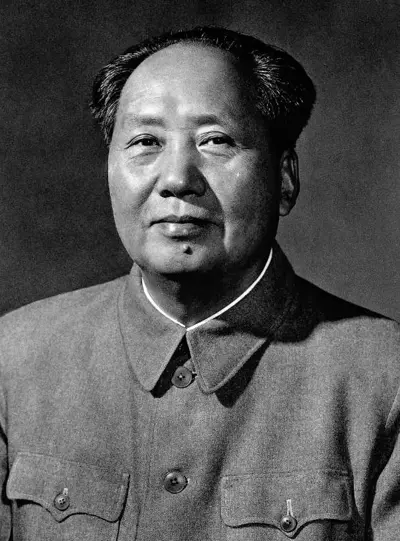
Mao Zedong, also known as Chairman Mao, was a Chinese communist revolutionary who was the founder of the People's Republic of China (PRC), which he ruled as the chairman of the Chinese Communist Party from its establishment in 1949 until his death in 1976. Ideologically a Marxist–Leninist, his theories, military strategies, and political policies are collectively known as Maoism.
