Henry David Thoreau Quotes
Visit the Navy-Yard, and behold a marine, such a man as an American government can make, or such as it can make a man with its black arts - a mere shadow and reminiscence of humanity, a man laid out alive and standing, and already, as one may say, buried under arms with funeral accompaniments.
Thoreau, Henry David. "Resistance to Civil Government." Aesthetic Papers, edited by Elizabeth P. Peabody, The Editor, 1849, p. 190.


These two states actually prohibited their legislatures from maintaining a standing army. Similar sentiments were in the constitutions or bill of rights of New Hampshire, Delaware, Maryland and Massachusetts but the option was left with the legislatures. A similar phrase appears in the Virginia Bill of Rights of 1776.

In early America, there was great concern about a standing army—a military force that exists and is organized in peacetime. History showed the founding fathers that tyrants who siezed power almost always did so by getting control of the standing army. The logic was if there is no standing army, no one can control it and therefore no tyrant can control the country by force. At the time, however, with oceans protecting us, there was penty of time to mobilize a defensive army should any foreign power invade. However, with modern military technology, and the importantance of retaliation as a protective3 strategy, it is virtually impossible to not have a standing army and stoll be secure.


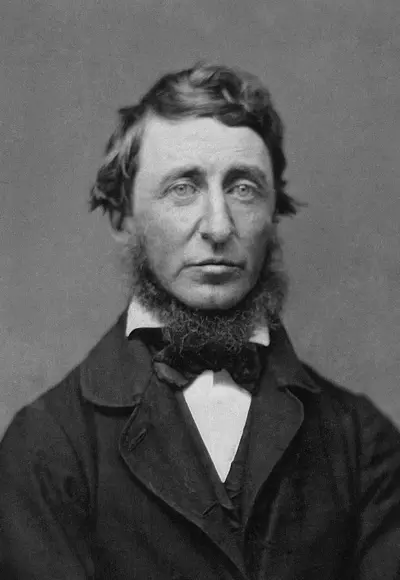
Henry David Thoreau was an American naturalist, essayist, poet, and philosopher. A leading transcendentalist, he is best known for his book Walden, a reflection upon simple living in natural surroundings, and his essay "Civil Disobedience" (originally published as "Resistance to Civil Government"), an argument for disobedience to an unjust state.
