Mao Zedong Quotes
The state machine, including the army, the police and the courts, is the instrument with which one class oppresses another. It is an instrument of oppression against all hostile classes; it means violence and is certainly not anything 'benevolent.' 'You are merciless.' Quite so. We definitely do not adopt a benevolent policy towards the reactionary activities of the reactionaries and the reactionary classes.
Mao, Zedong. "On the People's Democratic Dictatorship." Selected Works of Mao Tse-tung, vol. 4, Foreign Languages Press, 1961, p. 418.


then KGB leader. Khrushchev had rounded up and arrested an assortment of dissidents and non enthusiastic communists It was to culminate in 8 million arrests and 1 million executions.

The Laogai are state run “correction camps.”

The war in Europe had ended in victory and the British people were looking for a better standard of living after their wartime privation. Churchill represented the class system, the Empire, and bellicose leadership and didn’t temper his approach to the peace that he had won. He made this blunder and associated the Labor Party and their social welfare state with a coming Gestapo—the name of the Nazi secret police. It was all over the top and the Conservative Party was trounced at the polls. He would be elected Prime Minister a decade later.

Francisco Ascaso, Buenaventura Durruti, Juan Garcia Oliver, Aurelio Fernandez, Ricardo Sanz, Gregorio Jover, Antonio Ortiz and Antonio Martinez "Valencia

This was a very important quotation in that Sartre was a very influential liberal philosopher and when he condemned Russian communism, many other liberals opposed communism, and those who had already felt vindicated in their decision.


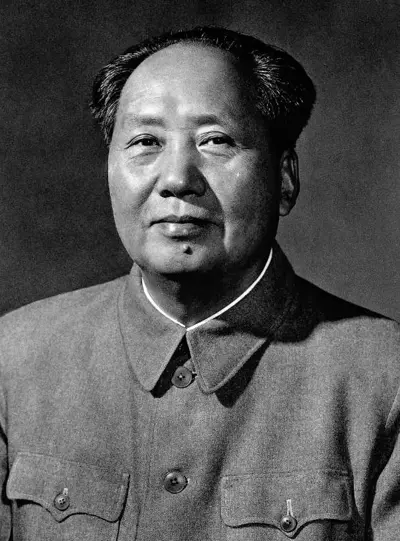
Mao Zedong, also known as Chairman Mao, was a Chinese communist revolutionary who was the founder of the People's Republic of China (PRC), which he ruled as the chairman of the Chinese Communist Party from its establishment in 1949 until his death in 1976. Ideologically a Marxist–Leninist, his theories, military strategies, and political policies are collectively known as Maoism.
