Wil S. Hylton Quotes
Desertion is the army's dirty little secret. Since the beginning of the Iraq war, more than 20,000 American soldiers have given up the fight. Most of them disappear while at home on leave, fading into a network of family and friends, and the army does not typically chase them down.
Hylton, Wil S. "The Deserter." GQ, 2007.


The Wars continued over a decade, costing thousands of American (and Coalition) troops their lives, many more their limbs and mental well-being, with a monetary cost of over trillions of dollars, and the achievements have been few and meager.

See {637982} for one of the major reasons.

He was commenting on some of the military disciplinary, logistical, intelligence, and tactical breakdowns that had occurred in the Afghanistan War.

There were so many Blacks fighting for the Americans in the Revolution that the British Commander had to issue a special proclamation which would make slaves of any Negro captured but issued freedom to those who would desert. Despite the greater risk to Negro Revolutionaries than their white counterparts many volunteered and few deserted.


The Seminole Wars were one of the low points in American military behavior. With the specific permission of Commanding General Jesup, the soldiers were to loot the homes and personal possessions of the enemy civilians as well as fighters, but he favored extermination and there were many atrocities. He even seized the Seminole Leaders who had been invited for Peace Talks.

In the 1930s, led by the conservative Republicans, there was an isolationist subset of our population and the Congress that blocked all efforts to increase defense spending and readiness. The attitude towards the military was terrible. After WWII, the Republicans, realizing the weakness of their earlier political philosophy, flip flopped and went to the other extreme becoming hyper pro-military with little oversight of the needs.

This would be like an American President firing the congressional chaplains. However this is only one small, but telling, example of Atatuk’s secularization of the nation which had a great deal to do with Turkey becoming a modern great power—by far the strongest and most developed of the Islamic world.

The “surge” was the short term injection of a large number of American combat troops into Iraq when the Iraq War was going badly. President George W. Bush, who at the urging of Vice President Cheney and the neoconservatives had invaded Iraq and while the invasion went well the administration botched the so-called peace and America was in the midst of a Iraqi civil war. Bush went ahead with the surge despite the advice of the Joint Chiefs. What makes the quotation particularly interesting, beyond the fact that the senior military advice was ignored, was that the President had always campaigned on the principle that the President should listen to the senior American Military officials on military tactics and strategy. He like Franklin Roosevelt, Harry Truman, Dwight Eisenhower, John F. Kennedy, and other presidents found that the military leadership perspective was often very narrow and not even militarily infallible. The Iraq War turned in our favor after the surge albeit that there have been arguments since then as to whether or not the surge was the reason or was it due to other factors which occurred at the same time. Probably, all were factors.

This is a very important quotation because it and {641523} show the great difficulty that Washington was under and the fact that he repeatedly asked Congress for assistance very little of which was provided.
This is surprising to most people who believed the the Vietnam War draft resistance was the first in American History and an aberation. Actually, there have been active draft resistance in America as long as there has been military conscription.

He had been asked by a reporter if his Marines would be able to take Baghdad in the American invasion of Iraq, 2007. Kelly commanded the Marines charged with taking Baghdad. They did.


Referring to the many mistakes made in the implementation and planning of the Iraq War.

Mechanics was a general term for people who made things, or fixed things. Ramsay was the first major historian of the American Revolution.
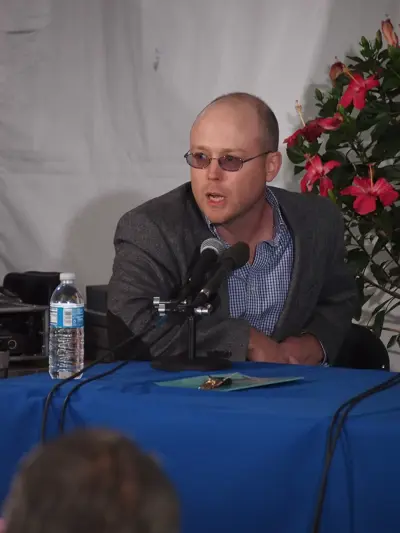
Wil S. Hylton is an American journalist. He is a contributing writer for The New York Times Magazine and has published cover stories for The New Yorker, Rolling Stone, Esquire, Harper's, Details, GQ, New York, Outside, and many others.
