Isaac Asimov Quotes
Dalton's records, carefully preserved for a century, were destroyed during the World War II bombing of Manchester. It is not only the living who are killed in war.
Asimov, Isaac. Asimov's Biographical Encyclopedia of Science and Technology. Doubleday, 1964, p. 257.


Berger was actually prosecuted, convicted, and sentenced to 20 years in prison, for this editorial. The House refused to seat him after the 1918 election (see {587981}); his constituents re-elected him in 1920 anyway. Finally the Supreme Court overturned his conviction, and he was again seated in Congress.


All deceased American troops who were killed in the Middle East were returned to the mortuary unit at Dover Air Force Base in Delaware, In previous wars the press had access to the mortuary and showed pictures of the flag draped caskets returning. However in the Iraq War, the administration, trying to deemphasize the high American death toll of troops, made Dover off limits to the press and made all the processes secret. However, the exact number of casualties and their identities became known through other sources and the media ran photo of the deceased.
At the time, the Russians and the Nazis had a pact and were allies so the Russians did not want the U.S. in the war. When the Russians changed sides, the Communist party line reversed itself and military of other aid to Russia was advocated as well as direct entry into the war. See {598503} for additional communist slogans of the day.

The speech was addressed to those American imperialist forces that were supporting the war in the Philippines.

This quotation is important because the American public and their leaders saw only one course of action—invasion of the Japanese Mainland. The debate was whether to attempt the invasion right away or bomb and blockade Japan into destruction and starvation weakening the population so their resistance would not produce the kind of casualties that we had experienced with the Invasion of Okinawa. The bombing and blockade strategy was selected and 80 percent of Tokyo was obliterated. Yet the Japanese refused to surrender even after all its manufacturing capability was destroyed and the agriculture was beginning to be destroyed. Most Americans did not realize it but the atomic bomb was being made ready for use. After the test bomb in New Mexico, we had enough fissionable material for 2 bombs and it would take several months for each additional bomb. The use of the atomic bomb at the time seemed not much different from the massive bombing that had already taken place. More Japanese were killed in some of these conventional bombings than with the Atomic Bomb. The key believe was that the Japanese would not give up. After the first A bomb, they still would not surrender, and when the Emperor decided on surrender after the 2nd bomb, there was a military insurrection in the palace to stop the Emperor’s surrender message to the people from being broadcast. It was just minutes too late, and the Emperor had to be obeyed. Invasion, with its terrible casualties—many more than the atomic bombs—was unnecessary.


At Potsdam the Allies had called for the unconditional surrender of the Japanese and reiterated what had been allied policy that the surrender must be unconditional. Even after the Hiroshima bombing, the Japanese military cabinet voted not to surrender. After the second atomic bomb, the Emperor decided to surrender, but even then there was an attempted military coup to prevent that. Fortunately, the coup failed. We did not have any more atomic bombs immediately ready and it would have taken months to construct more.

Although the Yugoslav casualties were horrific, they inflicted great casualties on the Germans who lost more men fighting the Yugoslavs than they lost to any other of the allies except the Russians.

over civilian casualties of American attacks The military over-promoted our smart weapons degree of capability to where most people thought that the weapons and the intelligence was much more accurate and controllable than it was. When innocent Afghan civilians were killed by American use of smart weapons, the Afghan’s believed that the only two explanations were that the Americans wanted to kill the civilians or that they didn’t care enough to carfully use their smart weapons properly.


This quotation gives us a concept of the WWII home front effort where virtually everyone in American society was personally involved on a daily basis in the war. See also {637440}. This was so dramatically different from the home fronts for the wars in Afghanistan and Iraq where most of the American public had no direct contact with the war effort and was not called upon or even needed to do anything.

While he thought his own country had been so badly impacted by the war, other nations were in worse shape and suffered more. Russia for example. And of course Germany brought total devastation on itself.

Unfortunately, the prime minister turned out to be very accurate in his predictions. The Second World War functioned just as he said.

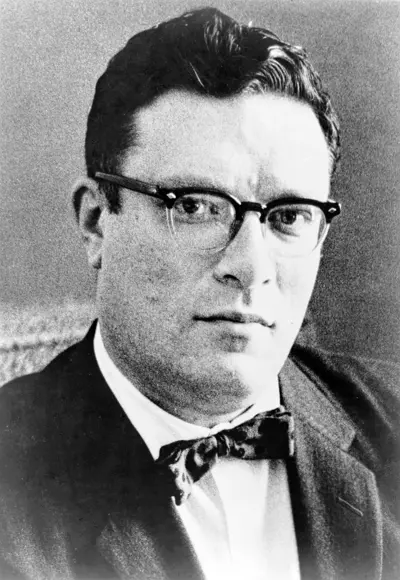
Isaac Asimov was an American writer and professor of biochemistry at Boston University. He was known for his works of science fiction and popular science. Asimov was a prolific writer, and wrote or edited more than 500 books. He also wrote an estimated 90,000 letters and postcards.
