Isaac Asimov Quotes
John Dalton's records, carefully preserved for a century, were destroyed during the World War II bombing of Manchester. It is not only the living who are killed in war.
Asimov, Isaac. Asimov's Biographical Encyclopedia of Science and Technology. Doubleday, 1964, p. 257.


At Potsdam the Allies had called for the unconditional surrender of the Japanese and reiterated what had been allied policy that the surrender must be unconditional. Even after the Hiroshima bombing, the Japanese military cabinet voted not to surrender. After the second atomic bomb, the Emperor decided to surrender, but even then there was an attempted military coup to prevent that. Fortunately, the coup failed. We did not have any more atomic bombs immediately ready and it would have taken months to construct more.


The speech was addressed to those American imperialist forces that were supporting the war in the Philippines.

One of the predictions of the oncoming war with Germany.


The British and American bombing of Germany had become so effective that most of the German industrial system was destroyed. However, early in the War, Germany had violated the Geneva Convention and was indiscriminately bombing London and other part of England. In addition the German Air Force had bombed Warsaw, and many other cities throughout Europe. The German’s had killed over 20 million Europeans. When the Allied bombing produced high collateral damage against civilians, some argued that even though German had deliberately used this tactic, the allies should stop the saturated bombing if there were to be high civilian collateral damage. Others argued that it was unfortunate but a military necessity. There were others like Brenen, who argued that killing German women and children was desirable and just.


This is a significant quotation because the bombing of Hamburg was somewhat controversial. The Germans had bombed Warsaw, London and many other cities contravening the them accepted laws of war. The allies retaliated by bombing German cities where there was extensive war manufacturing; however, there were some allied war planners who saw the bombing of German cities as a way of breaking morale and shortening the war above and beyond the damage to the factories. A new technique had been used in bombing Hamburg—firebombing. Many thousand coordinated incendiary bombs ignited fires throughout the city which combined into a huge firestorm, killing even people with heat that were in air raid shelters. More than 100,000 Germans died—a greater toll than would later take place at Hiroshima and Nagasaki. There was some allied criticism that the firebombing just killed people but made the survivors even more adamant about continuing the fight, This quotation, from a leading German officer, supported the view that there was a strong positive military effect. The technique was repeated in Tokyo to even greater effect before the atomic bombed were ready. (The Japanese had also bombed civilian cities first as well as committed other atrocities.

Although the Yugoslav casualties were horrific, they inflicted great casualties on the Germans who lost more men fighting the Yugoslavs than they lost to any other of the allies except the Russians.

While he thought his own country had been so badly impacted by the war, other nations were in worse shape and suffered more. Russia for example. And of course Germany brought total devastation on itself.

Unfortunately, the prime minister turned out to be very accurate in his predictions. The Second World War functioned just as he said.

At first reading, this is just a common report of a German war correspondent riding along on a bombing mission. However what makes it a very important historical quotation is the description of the fires and the date. In WWII the allies firebombed Hamburg {624722} and Dresden, and were then accused by the Germans—and by some historical revisionists in the 21st century—of bombing civilian cities and using the firbombing technique where one huge conflagrant sucked the air out of the area and roasted even people in bomb shelters. However, it was clear that the Germans had started the bombing of civilian cities, but the firebombing was less clear. This quotation proves that it was the Germans who first broke the rules of war and that made the subsequent Allied use of the technique legal and for most people then moral.


Eisenhower was then the Supreme Allied Commander of the Allied Forces.

This quotation gives us a concept of the WWII home front effort where virtually everyone in American society was personally involved on a daily basis in the war. See also {637440}. This was so dramatically different from the home fronts for the wars in Afghanistan and Iraq where most of the American public had no direct contact with the war effort and was not called upon or even needed to do anything.

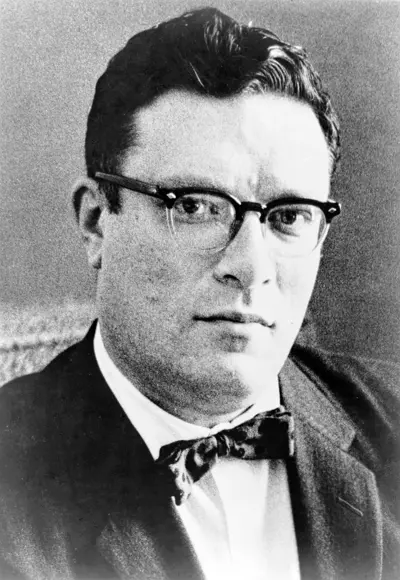
Isaac Asimov was an American writer and professor of biochemistry at Boston University. He was known for his works of science fiction and popular science. Asimov was a prolific writer, and wrote or edited more than 500 books. He also wrote an estimated 90,000 letters and postcards.
