Thomas Frank Quotes
Conservatives may believe that impoverished borrowers destroyed Wall Street. But we liberals will not fool ourselves that stupid bankers sank conservatism for good.
Frank, Thomas. "Return of the Living Dead." The Wall Street Journal, 18 Feb. 2009.


There was a financial crisis in the country and the world when highly risky home mortgage loans defaulted leaving investors and speculators in mortgage-backed securities in a poor position. The investors had been reaping very high interest rates for their risky investments, but this was the first time that this form of risky investment had failed. The investors, of course were looking for a bailout from government. When the Bush administration failed to bail out investment bank, Lehman, there was a panic and the banking system of the country and much of the world froze up. Bush and his Secretary reversed their bailout of speculators policy and provided various assistants and bailouts to the very bankers and other investors who had caused the economic meltdown. The policy was continued by the Obama administration although the bailouts were just as distasteful to Obama as they were to Bush, but most economists agree that the two presidents very distasteful and unpopular bailout actions probably saved the nation from a massive depression. After being bailed out by the taxpayers, the Bankers then paid themselves exorbitant bonuses while the results of their management put 10 percent of the country out of work.


Born thought that her agency was responsible for regulating the new esoteric financial products—derivatives including credit default swaps—for otherwise there would be no regulation at all of financial products that could dwarf the stock and bond market. Summers persuaded her to back off. When the Meltdown of 2008 hit, the huge derivative exposure of the large banks and some insurance companies was so great that it was one of the major causes for the meltdown of the entire banking system. Summers, normally a great economist not only called this one wrong, but later, along with most other government and private economists ignored a very explicit warning—See {637168}, {637986}, and {620038}.


Actually, there have been “paranoid” fear of opposition political viewpoints in America very often. In the early days of the Republic, the Federalists main concern was not England or other foreign enemies, but Jefferson’s Democratic Republicans. And those Jeffersonians were absolutely convinced that the greatest danger to America was the Federalists who would bring back a monarchy if they could. The Jacksonians triggered a similar polarization. The Civil War stemmed from this extreme. Even America’s most popular President, Franklin Delano Roosevelt, who was elected to 4 successive terms, was perceived as the major “enemy” of America along with his wife Eleanor and the other New Dealers.

He had just finished itemizing the poor economic performance of the Republicans under George W. Bush and comparing it with the thriving economy and millions of job opportunities created by the Democrats under William Clinton.


During this crises, the taxpayers of America had to bail out most of the largest banks in the country whose profligate investment strategy had squandered their depositors and other customers money as a result of the spiral to reap higher and higher profits until they collapsed with the executives making millions in bonuses when their banks were losing money. They put millions of people out of work, and their greedy policies crashed the housing market and then the same banks evicted millions of families when the banks foreclosed on their mortgages with thousands of bank officers committing felonies in the foreclosure processes. This was to Blankfiein and many of the other leading bankers, “God’s Work”.


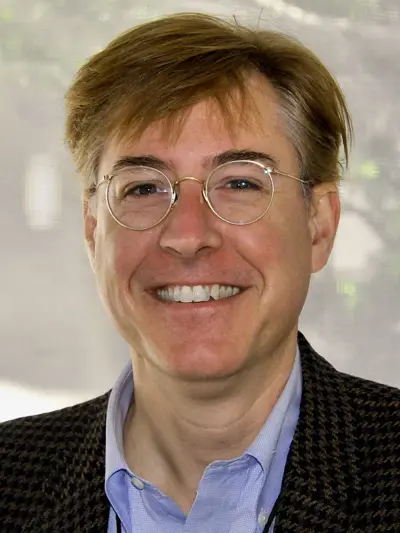
Thomas Carr Frank is an American political analyst, historian, and journalist. He co-founded and edited The Baffler magazine. Frank is the author of the books What's the Matter with Kansas? (2004) and Listen, Liberal (2016), among others. From 2008 to 2010 he wrote "The Tilting Yard", a column in The Wall Street Journal.
