John Lanchester Quotes
'The Big Short' is, among other things, a blistering, detailed indictment of the way Wall Street does business, and its particular villains are the investment banks.
Lanchester, John. "The Big Short by Michael Lewis." The Guardian, Guardian News & Media, 2010.


Arguably, for most of American History, most of the “smartest” people contributed to manufacturing, construction, research and development—activities that produce things that are wanted and/or needed. However, Wall Street began attracting and paying for some of the smartest people in the society, who when they engaged in finance—not only contributed less to manufacturing, but began to create highly complex financial instruments and procedures that few people could understand and with which regulators have difficulty understanding. These and the other schemes of financing have been major factors in the economic problems that have beset the economy including the meltdown of 2008 and the subsequent Great Rescission.

Greenspan and some others assumed that the shareholders and the executives who ran the financial institutions had the same vested interests. But the executives had disconnected themselves from the fate of the shareholders, by having Golden Parachutes to protect the executives even if the business failed and they were fired. And they got their bonuses immediately so by the time the authorities and the shareholders discovered that the profits the bonuses were paid for were illusory, the bonus money was safely stored in a secret offshore bank. But if things went wrong, there was always the play of getting a government bailout which would keep the executives getting their huge bonuses and keep the shareholders from losing their money as the taxpayers covered most of the losses.

When the Meltdown hit America, the crisis drew attention to the fiscal solvency and stability of banks in most of the world. The Irish banks were much more overextended than those of most counties and when that came to light there was a bank panic in Ireland. Ahern and the Irish Dail (parliament) decided to bail out the Irish bank at a very great cost to the rest of the Irish economy and people. He believed if Lehman Brothers had been bailed out, as America did with other institutions, the Irish bank bubble would not have burst. It is not known whether he actually meant to use the word “testicles” or he made a gaff intending to use the word “tentacles”. Both have relevant meaning in the situation with a significant shade of difference in meaning between the two.


While Stockman and some others believe that the Meltdown of 2008 would have “run its course” if the government didn’t bail out financial institutions, the very conservative Republican Secretary of the Treasure Paulson and the Chairman of the Federal Reserve told President Bush, Congress, and incoming President Obama that if there was not a quick bailout, the economy of the nation would crash with a depression resulting as bad if not worse of the Hoover Depression of 1929. Bush and Obama and the majority of Congress agreed and took action to avoid that. There is no way of knowing whether they were right or Stockman was. However, the people with the responsibility of governing and safeguarding the nation clearly did not want to take a chance that the advocates of no action might be wrong.

Sovereign credit substitution is where the government, one way or another, assumes and guarantees the debts of private corporations. This is an elegant way of saying: “taxpayer bailouts”
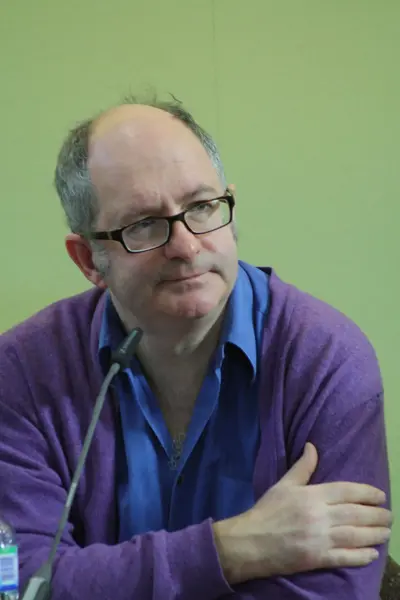
John Henry Lanchester is a British journalist and novelist. He was born in Hamburg, brought up in Hong Kong and educated in England; between 1972 and 1980 at Gresham's School in Holt, Norfolk, then at St John's College, Oxford. He is married to historian and author Miranda Carter, with whom he has two children, and lives in London.
