Joe Sestak Quotes
Created by Congress as part of the Dodd-Frank Wall Street Reform and Consumer Protection Act of 2010, the CFPB was a direct response to the financial crisis and ensuing Great Recession that began with the subprime mortgage debacle and the unraveling of Lehman Brothers investment bank.
Sestak, Joe. "The Economy." Joe Sestak for President, 2019.


The result was regulation of the banks and the creation of the SEC to regulate the stock market, However, over the years, the regulations were not able to keep up with the sophisticated development of new forms of investments and financial instruments and the financial industry were able to speculate with other people’s money in ways that FDR and his reformers never imagined. Finally, even the regulation that did exist was weakened by the policies of the George W. Bush administration and the combination brought about the Great Recession of 2008 where the profits from excess speculation were privatized and the losses, socialized with the taxpayer and the American worker bearing the brunt while most of the speculators were bailed out and made more money than ever. The Obama administration tried to reform the situation, but was unable to put an end to the legal speculation with other people’s money or of having institutions that were “too big to fail.”

Sovereign credit substitution is where the government, one way or another, assumes and guarantees the debts of private corporations. This is an elegant way of saying: “taxpayer bailouts”

When the Meltdown hit America, the crisis drew attention to the fiscal solvency and stability of banks in most of the world. The Irish banks were much more overextended than those of most counties and when that came to light there was a bank panic in Ireland. Ahern and the Irish Dail (parliament) decided to bail out the Irish bank at a very great cost to the rest of the Irish economy and people. He believed if Lehman Brothers had been bailed out, as America did with other institutions, the Irish bank bubble would not have burst. It is not known whether he actually meant to use the word “testicles” or he made a gaff intending to use the word “tentacles”. Both have relevant meaning in the situation with a significant shade of difference in meaning between the two.

The Dodd Frank bill was designed, in the aftermath of the large bank induced meltdown of 2008 and the Great Recession, to regulate the banking industry so that no bank would be “too big to fail”. However, although the bill placed many restrictions on the banks to prevent much of their risky economic behavior, which the banks complained inhibited their growth and profitability. However, the bill did not put any limits on the size of the large banks and their critical proportion of the U. S. Financial System. If a bank was large enough, the government did not dare allow the bank to fail regardless of how profligate the Bank had been with its depositors’ money. So the shareholders made big money from the Bank’s risky behavior if it turned out well, and if not the taxpayers had to bail the banks out, because they were too big to fail without causing much of the rest of the country to also fail. Warren and others wanted a simple solution. Break up the large banks into smaller ones and then if any one of the small units makes poor investments, the bank could fail and other than its shareholders and creditors, the effect would not be so serious that the government could not allow the bank to go into bankruptcy. Mismanaged banks could fail like other mismanaged companies and not take down much or the rest of the country with them. But the banks lobbied to prevent that, and by 2014, 6 years after the taxpayers had to bail out banks that were too big to fail, many of the banks were twice as large as they were when they were already too big to fail.


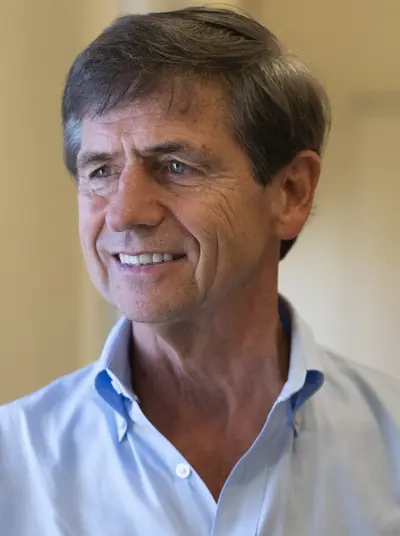
Joseph Ambrose Sestak Jr. is an American politician and retired U.S. Navy officer. A member of the Democratic Party, he represented Pennsylvania's 7th congressional district in the U.S. House of Representatives from 2007 to 2011 and was the Democratic nominee for the United States Senate in 2010. A three-star vice admiral, he was the highest-ranking military official ever elected to the United States Congress at the time of his election. He was a candidate for the Democratic presidential nomination in the 2020 election, launching his campaign on June 23, 2019 and ending it on December 1, 2019, subsequently endorsing Amy Klobuchar.
