Ayn Rand Quotes
The conservatives see man as a body freely roaming the earth, building sand piles or factories—with an electronic computer inside his skull, controlled from Washington. The liberals see man as a soul freewheeling to the farthest reaches of the universe—but wearing chains from nose to toes when he crosses the street to buy a loaf of bread.
Ayn Rand, 1905-1982, Writer & Philosopher, Philosophy: Who Needs It, 1982
Sourced by: Eigen's Political and Historical Quotations


Actually, there have been “paranoid” fear of opposition political viewpoints in America very often. In the early days of the Republic, the Federalists main concern was not England or other foreign enemies, but Jefferson’s Democratic Republicans. And those Jeffersonians were absolutely convinced that the greatest danger to America was the Federalists who would bring back a monarchy if they could. The Jacksonians triggered a similar polarization. The Civil War stemmed from this extreme. Even America’s most popular President, Franklin Delano Roosevelt, who was elected to 4 successive terms, was perceived as the major “enemy” of America along with his wife Eleanor and the other New Dealers.


What if you are a conservative in a liberal environment? Then what you are conserving is liberalism.
His reference was to his experience as an undergraduate at Dartmouth, which he and associates views as a liberal organization, while others viewed it as a conservative bastion of the establishment.


He was one of a Eugenics movement advocates who advocated forced sterilization of mentally retarded and other people, something that a century later was anathema to most Americans.

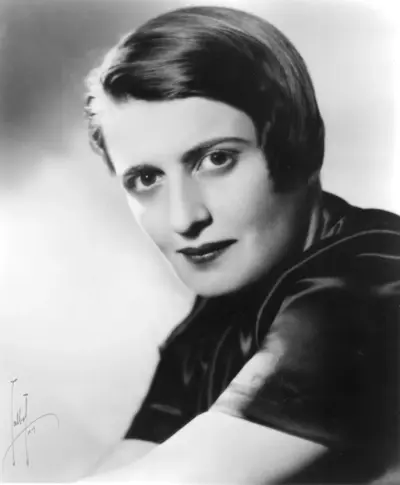
Ayn Rand was a Russian-American writer and philosopher. She is known for her two best-selling novels, The Fountainhead and Atlas Shrugged, and for developing a philosophical system she named Objectivism. Born and educated in Russia, she moved to the United States in 1926. She had a play produced on Broadway in 1935 and 1936. After two early novels that were initially unsuccessful, she achieved fame with her 1943 novel, The Fountainhead. In 1957, Rand published her best-known work, the novel Atlas Shrugged. Afterward, she turned to non-fiction to promote her philosophy, publishing her own periodicals and releasing several collections of essays until her death in 1982.
