Stephen Leacock Quotes
Everybody in Mariposa is neither liberal or conservative or else is both.
Stephen Leacock, 1869-1944, Canadian humorist, The great election of Mossinaba County
Sourced by: Eigen's Political and Historical Quotations


What if you are a conservative in a liberal environment? Then what you are conserving is liberalism.
His reference was to his experience as an undergraduate at Dartmouth, which he and associates views as a liberal organization, while others viewed it as a conservative bastion of the establishment.


Often called Blackshirts. He is one of the few politicians in the world who saw Fascists and Nazis in the middle of the political spectrum.


So far as he was concerned, Republican moderates—his own party members—were liberals. Anyone who did not support the extreme Conservative agenda, was an enemy and a liberal. He and the Tea Party drove almost all the moderate Republicans out of the party.

Actually, there have been “paranoid” fear of opposition political viewpoints in America very often. In the early days of the Republic, the Federalists main concern was not England or other foreign enemies, but Jefferson’s Democratic Republicans. And those Jeffersonians were absolutely convinced that the greatest danger to America was the Federalists who would bring back a monarchy if they could. The Jacksonians triggered a similar polarization. The Civil War stemmed from this extreme. Even America’s most popular President, Franklin Delano Roosevelt, who was elected to 4 successive terms, was perceived as the major “enemy” of America along with his wife Eleanor and the other New Dealers.


Holman is commenting on the Harvey Weinstein scandal in which he is accused of multiple sexual assaults over 30 or more years and the lack of liberal and progressive outrage and passive acceptance of his behavior by large circles of people who knew.


Agree resigned from the CIA in protest to its political positions.

Lecture, FDR Presidential Library, Hyde Park, NY, June 24, 2006

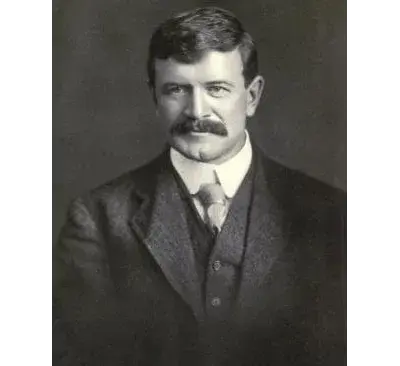
Stephen P. H. Butler Leacock FRSC was a Canadian teacher, political scientist, writer, and humourist. Between the years 1915 and 1925, he was the best-known English-speaking humourist in the world. He is known for his light humour along with criticisms of people's follies.
