Vladimir Lenin Quotes
The worst enemy of the new radicals are the old liberals.
Vladimir Lenin
Nikolai Lenin, 1870-1924, Russian Communist Premier, Quoted in Jackman, Political Quotations, Crown, 1982
Sourced by: Eigen's Political and Historical Quotations


Actually, there have been “paranoid” fear of opposition political viewpoints in America very often. In the early days of the Republic, the Federalists main concern was not England or other foreign enemies, but Jefferson’s Democratic Republicans. And those Jeffersonians were absolutely convinced that the greatest danger to America was the Federalists who would bring back a monarchy if they could. The Jacksonians triggered a similar polarization. The Civil War stemmed from this extreme. Even America’s most popular President, Franklin Delano Roosevelt, who was elected to 4 successive terms, was perceived as the major “enemy” of America along with his wife Eleanor and the other New Dealers.


What if you are a conservative in a liberal environment? Then what you are conserving is liberalism.
His reference was to his experience as an undergraduate at Dartmouth, which he and associates views as a liberal organization, while others viewed it as a conservative bastion of the establishment.


So far as he was concerned, Republican moderates—his own party members—were liberals. Anyone who did not support the extreme Conservative agenda, was an enemy and a liberal. He and the Tea Party drove almost all the moderate Republicans out of the party.

I can't admit the Duke of Bedford ever was radical; God knows! I wish everybody now was a little so!
The young Queen was somewhat frustrated by the very conservative nature of all about her. In some ways, she herself was quite radical in her thinking and after her marriage to Prince Albert, she became moreso.


Kennedy was dining with Time Magazine publisher Henry Luce soliciting support for JFK's presidential candidacy. Luce observed that JFK to obtain the Democratic nomination would have left-of-center domestic policies. Luce was right and the father, wrong.

Over time, this has been a good description of the difference between the Democratic and Republican parties.
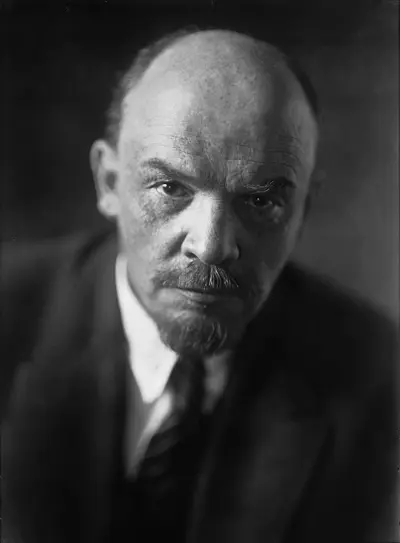
Vladimir Ilyich Ulyanov, better known by his alias Lenin, was a Russian revolutionary, politician, and political theorist. He served as the first and founding head of government of Soviet Russia from 1917 to 1924 and of the Soviet Union from 1922 to 1924. Under his administration, Russia, and later the Soviet Union, became a one-party socialist state governed by the Soviet Communist Party. A Marxist, he developed a variant of this communist ideology known as Leninism.
