Ralph Waldo Emerson Quotes
The two parties which divide the state, the party of Conservatism and that of Innovation, are very old, and have disputed the possession of the world ever since it was made.
Ralph Waldo Emerson, 1803-1882, Poet & Essayist, Lecture, Masonic Temple, Boston, Massachusetts, December 9, 1841
Sourced by: Eigen's Political and Historical Quotations


Eldest son of Robert Walpole

Kennedy was dining with Time Magazine publisher Henry Luce soliciting support for JFK's presidential candidacy. Luce observed that JFK to obtain the Democratic nomination would have left-of-center domestic policies. Luce was right and the father, wrong.


Erbakan aid this in a speech made before he became Prime Minister. After he left office, he was tried and convicted for this statement which violated Turkey’s strict ban against incitement of one group against another.


What if you are a conservative in a liberal environment? Then what you are conserving is liberalism.
His reference was to his experience as an undergraduate at Dartmouth, which he and associates views as a liberal organization, while others viewed it as a conservative bastion of the establishment.

So far as he was concerned, Republican moderates—his own party members—were liberals. Anyone who did not support the extreme Conservative agenda, was an enemy and a liberal. He and the Tea Party drove almost all the moderate Republicans out of the party.


Actually, there have been “paranoid” fear of opposition political viewpoints in America very often. In the early days of the Republic, the Federalists main concern was not England or other foreign enemies, but Jefferson’s Democratic Republicans. And those Jeffersonians were absolutely convinced that the greatest danger to America was the Federalists who would bring back a monarchy if they could. The Jacksonians triggered a similar polarization. The Civil War stemmed from this extreme. Even America’s most popular President, Franklin Delano Roosevelt, who was elected to 4 successive terms, was perceived as the major “enemy” of America along with his wife Eleanor and the other New Dealers.

Over time, this has been a good description of the difference between the Democratic and Republican parties.


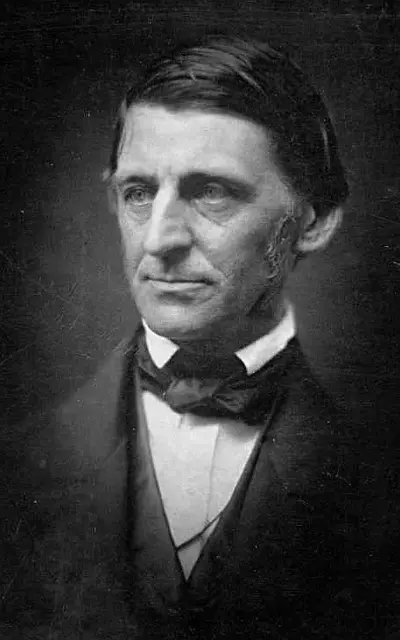
Ralph Waldo Emerson, who went by his middle name Waldo, was an American essayist, lecturer, philosopher, abolitionist and poet who led the transcendentalist movement of the mid-19th century. He was seen as a champion of individualism and a prescient critic of the countervailing pressures of society, and he disseminated his thoughts through dozens of published essays and more than 1,500 public lectures across the United States.
