H. D. Kumaraswamy Quotes
Congress must control their MLAs.
Kumaraswamy, H. D. "Congress must control its MLAs: HD Kumaraswamy." The Times of India, Bennett, Coleman & Co. Ltd., 28 Jan. 2019.

In Dolgoff’s era, his argument was that the political parties were so powerful that it was they who controlled who held public office, not the voters. And the parties were controlled by a few party leaders. However, when the system was reformed in the latter part of the 20th century, the individual incumbent member of Congress in America was so hard to dislodge due to the role of money and the advantage of incumbency, that the class of professional politicians was still very powerful. Reform had reduced the control of political parties but not politicians.

Two years later with bipartisan support Speaker Joseph Cannon was stripped of his party and the Rules Committee was created.


The Chairmen of the Committees then had tremendous, almost unilateral power. The chairman reached seniority by being elected over and over and had little opposition. At the time they were almost all older Democratic Congressmen from the "Solid South", very conservative and still racists despite the 1964 Civil Rights Act. They were outraged when a Freshmen member of Congress who rarely made a public statement, took on the most powerful members of the House and wanted to reform the Seniority. But Ms. Chisholm was a teacher in her professional life, and by challenging the seniority system and attracting the enmity of most of the Chairmen, the media and the public started to cover the dispute and Chisholm explained to America exactly how the system worked and how undemocratic and racist it was. Her effort put the Seniority System on the public agenda, and reforms evolved over the next decades." She was the first Black woman to be elected to Congress and was the first Black woman to actively campaign for the Presidency


as a result of the Watergate hearings and investigations and proceedings

The three "estates" were the Lords Spiritual (Clergy), Lords Temporal (Aristocracy) and the Commons. The other three estates have been forgotten, but the press is still known as the "fourth estate." See Emanuel Sieyes, s.v. "Voters and Voting," on the Third Estate

In 1628 Parliament, in response to abuses by King Charles I, was about to pass The Petition of Rights–-a type of Bill of Rights. The King gave assurances that the practices—such as forcing nobles to lend him money—would not continue and didn't want to be embarrassed by passage of a law which he claimed would indicate that the Parliament did not trust him and weaken the dignity of the monarchy. The Petition of Rights passed with Cole’s leadership.


In the Israeli system, voters do not vote for individual politicians; they vote for parties. Based on the proportion of votes, the parties are apportioned the number of seats in the Knesset they get. Then each party selects their winning candidates from their full list of candidates in order. The voters do get to see the entire list for each party, and there are party primaries to determine who is on the list and in what order.

At the time the power and prestige of Congress relative to the Presidency , was much greater than it is today. It was McKinley’s successor, Theodore Roosevelt, who began a 20th century trend which led to a reversal of the relationship between the Executive Branch and the Legislative.


Vidal, a staunch liberal held this view along with many ultra conservatives end extreme liberals. The constitution requires the Congress to declare war, but they have not done so for any of the wars since WWII. The President assumed the war power. And the only coherent budgets began.

In the EU most of the government power is dominated by appointed elites and not elected representatives.


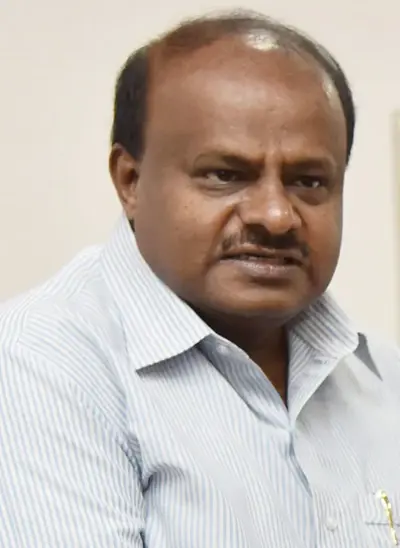
Hardanahalli Devegowda Kumaraswamy is an Indian politician and businessman. He is a former Chief Minister of Karnataka. He is a former president of the Karnataka State Janata Dal (Secular) and son of former Prime Minister of India H. D. Deve Gowda.
