William H. Seward Quotes
Come on then, Gentlemen of the Slave States. Since there is no escaping your challenge, I accept it in behalf of the cause of freedom. We will engage in competition for the virgin soil of Kansas, and God give the victory to the side which is stronger in numbers as it is in the right.
The issue is whether Kansas would enter the Union as a slave state of a free state. If a free state, the free states would be able to block further slavery. If Kansas were to become a slave state, the slave states would have a sufficient majority to make all future expansion hospitable to slavery. The slavery forces started sending man and families into Kansas so that they could vote; the abolitionists did the same. Both sides armed and a war began with each faction trying to kill or drive the other faction out of Kansas before the vote. See {49978} for the pro-slavery view of Kansas
William H. Seward, 1801-1872, Governor of New York (Whig), U.S. Senator (Whig & Republican, NY), U. S. Secretary of State, 1854
Sourced by: Eigen's Political and Historical Quotations


The nation in 1848 was very polarized over the issue of slavery. Taylor, never even mentioned the subject in his speeches and writings. He reused to answer any questions about the subject or indicate his own views. His strategy worked as the other politicians who took a stand—either way—alienated a large number of voters.

This quotation is often given by those who argue that Lincoln really did not care about the slavery issue. It is a terrific example of the limitations of quotations where there is artful rhetoric. Douglas, had in the 1st debate posed 7 “interrogatories” to Lincoln asking if he were pledged to certain positions regarding slavery. Douglas was trying to associate Lincoln with the most radical abolitionists in the land. By asking if Lincoln were pledged to the positions, Douglas thought that he had cornered Lincoln. For if Lincoln denied the pledges, he would appear to be backing off his anti slavery positions, and if Lincoln would not, then he would appear to support the most radical elements. Lincoln turned the rhetorical tables on his opponent. He first answered the question literally, emphasizing “pledged”. Just as Douglas thought he had forced Lincoln off his anti-slavery views, Lincoln stated what he would “like to see” as opposed to what he was pledged for. See {615826}.

The Republicans had broken off from the Whig Party and started a new one attracting some liberal Democrats also. The Republican Party described themselves as “radicals” and argued for major reform quickly.

The issue is whether Kansas would enter the Union as a slave state of a free state. If a free state, the free states would be able to block further slavery. If Kansas were to become a slave state, the slave states would have a sufficient majority to make all future expansion hospitable to slavery. The slavery forces started sending men and families into Kansas so that they could vote; the abolitionists did the same. Both sides armed and a war began with each faction trying to kill or drive the other faction out of Kansas before the vote. See {612516} for the anti-slavery perspective.

It is not only in modern times that there were “litmus tests” for appointees. Franklin Pierce had been elected as a Democrat with a coalition that included Southerners who were able to dominate the weak Pierce precluding abolitionists from any appointments.
of the North originally permitting slavery


Although escaped slaves could not fight for the North, they could be very useful on road building and other military engineering projects needing labor. Every time a slave escaped, it diminished the military engineering labor of the Confederates by one but added to that of the Union. Pinkerton and others however engaged many escaped slaves who volunteered for an incredibly dangerous mission. They returned back to the Southern lines into the slave work gangs, and organized slave escapes of groups of Blacks. In addition, many of them, by observing and overhearing the Confederate soldiers gained information regarding supply and troop levels and movements, and this they brought back to the Union officers. Those that were caught were executed as spies. Escaped slaves were espionage and covert operations agents before they were allowed to be soldiers.


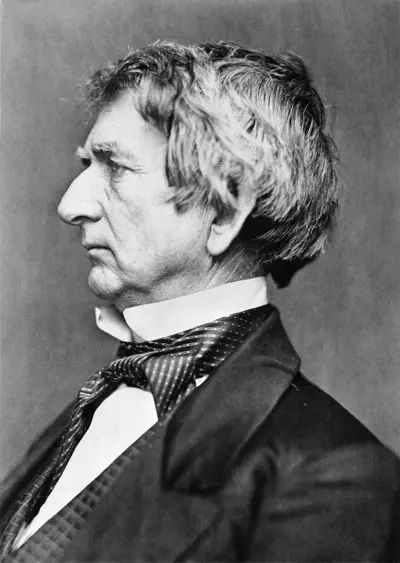
William Henry Seward was United States Secretary of State from 1861 to 1869, and earlier served as governor of New York and as a United States Senator. A determined opponent of the spread of slavery in the years leading up to the American Civil War, he was a prominent figure in the Republican Party in its formative years, and was praised for his work on behalf of the Union as Secretary of State during the Civil War.
