Collis Potter Huntington Quotes
Clean, Commercial and Communists.
Huntington classified the 1876 Senate into 3 categories. 'Clean' were those who voted his way but required no bribes. 'Commercial' voted his way but needed fiscal incentive. 'Communists' were those Senators who opposed his legislative agenda.
Collis P. Huntington, 1821-1900, President, Southern Pacific Railroad, Quoted in John A. Garraty, The New Commonwealth: 1877-1890
Sourced by: Eigen's Political and Historical Quotations


Alexander Dubcek, Communist leader of Czechoslovakia, had pushed reform so far that 5 Soviet armies invaded. Dubcek was brought to Russia where he tried to persuade the Russian premier that the invasion was contrary to the principles of socialism.

The revolutionists had just captured the Winter Palace: Vladimir Lenin


The Red Scare had already reached most conservatives and Truman and most others had not yet been affected by the fear of Communism that so many people had through the 1970s.

The “rebate agony” referred to a corrupt practice of the Railroads and the Large Monopolies. The railroads charged a very high rate for the transportation of important products like beef and oil. However, secretly they gave back a large percentage of the transportation rate charged to the trusts. They in turn could cut their prices and undersell all the smaller competitors who were paying “full freight” and could not afford to match the lower price. As soon as the smaller competitors were driven out of business in an area, the trust raised its rates even higher than they charged originally. The Railroad had made a small but reasonable profit on the freight of the trusts but they were guaranteed all their business. They also made huge profits on the higher rates that the small companies paid until those companies were driven out of business. Journalists like Ray Baker and Ida Tarbell had uncovered the rebate scheme which enabled the trusts to steal high amounts from the general public through unreasonably high prices. President Theodore Roosevelt was committed to try and regulate the railroads and not allow rebates but charge the same public rate to all with no rebates. Socialists like Sinclair, thought that this attempt would be hopeless—that the damage had already been done, and the trusts now had so much money that they could buy state legislatures and many in Congress to preserve their dominance.


He was a major critic of Socialism but he did acknowledge that the Socialist Movement had made major contributions.


3rd Earl Russell of Kingston. He favored and argued for a middle ground of a capitalistic socialism or a socialized capitalism, which is what most democracies became.


Many people had come to the conclusion that capitalism as it then existed was not sufficient to correct some of the serious inequities in society. They saw that socialism tended more to focus on those. However, they also saw in socialism per se, as it was than advocated, many other problems. Steffens seems to be the first person to describe that type of person, in this case, himself.

Harriman at that time was the United States Ambassador to Russia and one of President Roosevelt’s closest advisers. There were those who claimed that the Roosevelt administration was very naïve about the potential danger of Stalin. This statement as well as others like it, show that the administration was not so naïve and ignorant.


Amy is responding to Michelle Obama’s claim that “any woman who voted against Hillary Clinton voted against their own voice.”

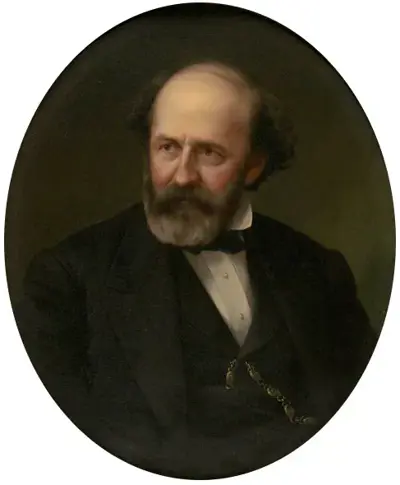
Collis Potter Huntington was an American industrialist and railway magnate. He was one of the Big Four of western railroading (along with Leland Stanford, Mark Hopkins, and Charles Crocker) who invested in Theodore Judah's idea to build the Central Pacific Railroad as part of the first U.S. transcontinental railroad. Huntington helped lead and develop other major interstate lines, such as the Southern Pacific Railroad and the Chesapeake & Ohio Railway (C&O), which he was recruited to help complete. The C&O, completed in 1873, fulfilled a long-held dream of Virginians of a rail link from the James River at Richmond to the Ohio River Valley. The new railroad facilities adjacent to the river there resulted in expansion of the former small town of Guyandotte, West Virginia into part of a new city which was named Huntington in his honor.
