Benjamin Tucker Quotes
Almost the only persons who may be said to comprehend even approximately the significance, principles, and purposes of Socialism are the chief leaders of the extreme wings of the Socialistic forces, and perhaps a few of the money kings themselves.
Tucker, Benjamin R. Instead of a Book, by a Man Too Busy to Write One. New York: Benj. R. Tucker, Publisher, 1893, p. 2.


Ataturk was not receptive toward Communism as some other world leaders were at the time. He saw its weakness far earlier than many others.


Alexander Dubcek, Communist leader of Czechoslovakia, had pushed reform so far that 5 Soviet armies invaded. Dubcek was brought to Russia where he tried to persuade the Russian premier that the invasion was contrary to the principles of socialism.


Socialism in its then pure form had the state owning and controlling all the major assets of the nation. In this sense it was contradictory to individual freedom and hence democracy. However, in the years after Tocqueville’s quotation and the industrial revolution, socialism has gradually moved away from state ownership and operations of all institutions and resources. Democracy has tended to adopt a more regulatory view to control the excesses of unbridled capitalism. The range of democratic nations by the 21st century encompassed differences but some were described as “social democracies” and had some state ownership but were basically capitalistic economies. Even the self-described Communist nations had become heavily capitalistic albeit with less political freedom. At the same time, even the United States—the epitome of 21st century capitalism, owned and controlled a few of the resources and means of production and tended to regulate the others—a substantial difference from the American democracy which Tocqueville studied.

Samuel Langhorne Clemens, 1835-1910. Ironically, during the McCarthy period and the Red Scare of the 1950s, some of the right wingers charged that Mark Twain’s writing was “Communist Propaganda”. Most of the accusers had never read most of Train’s work. At the time, the Communists had condemned the racial segregation that was then legal in America and most of the staunch Southern segregationists accused anyone who attacked segregation as a communist. Twain was one of the leading voices against American racism. As for communism, the accusers of Train had probably never read this particular quotation. Twain was an early severe critic of communism and used his favorite weapon—humor—to attack it.

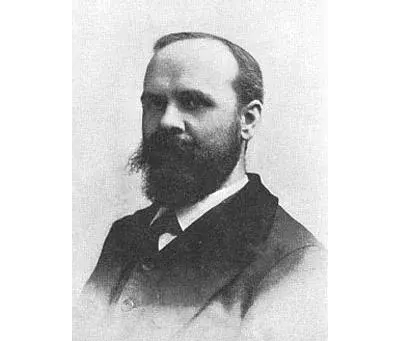
Benjamin Ricketson Tucker was an American anarchist. A 19th-century proponent of individualist anarchism which he called "unterrified Jeffersonianism", Tucker was the editor and publisher of the American individualist anarchist periodical Liberty (1881–1908) as well as a member of the socialist First International.
