Richard Burdon Haldane Quotes
Class division in knowledge goes deeper than any other class division.
Richard Burdon Haldane, 1856-1928, British War Minister, Lord Chancellor of Great Britain, Quoted by the President of the American Federation of Labor William Green, 1925
Sourced by: Eigen's Political and Historical Quotations


This was the prevailing view in Europe at the time; it was less so in the United States, where there were so many people who owned their own land and farmed it or developed manufacturing facilities and hence were the mind AND the limbs of the enterprises. However, the upper classes tended to agree with the European view. The difference between the American and European views was one of class mobility. In America “limbs” who demonstrated capacities of “mind” were much more able to advance in America. However, even into the 21st century here was a general feeling of the upper class that the “minds” made the critical and impactful decisions. This is one of the reasons that executive and CEO pay advanced so rapidly when compared with workers (the “linbs”).


By 2015, the income inequality had gotten so bad that even billionaires were expressing alarm.


This quotation became very famous because U. S. Senator Joseph Biden Jr. plagiarized it and was caught by the press.

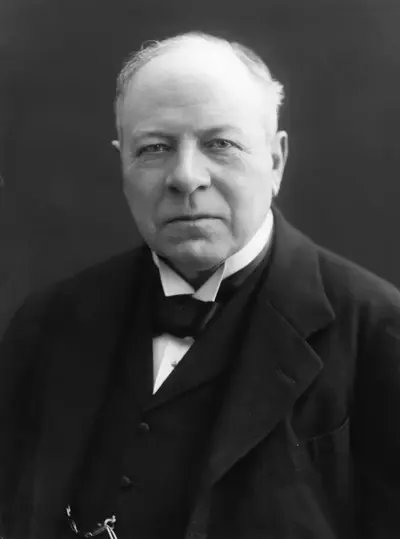
Richard Burdon Haldane, 1st Viscount Haldane, KT, OM, PC, FRS, FSA, FBA, KC was an influential British Liberal and later Labour politician, lawyer and philosopher. He was Secretary of State for War between 1905 and 1912 during which time the "Haldane Reforms" of the British Army were implemented. Raised to the peerage as Viscount Haldane in 1911, he was Lord Chancellor between 1912 and 1915, when he was forced to resign because of false allegations of German sympathies. He later joined the Labour Party and once again served as Lord Chancellor in 1924 in the first Labour administration. Apart from his legal and political careers, Haldane was also an influential writer on philosophy, in recognition of which he was elected a Fellow of the British Academy in 1914.
