Harry S. Truman Quotes
Career bureaucrats see themselves as the men who really make policy and look upon the elected officials as just “temporary occupants”.
Harry S Truman, 1884-1972, 33rd President of the United States (Democrat, MO), Years of Trial and Hope
Sourced by: Eigen's Political and Historical Quotations


3rd Earl Russell of Kingston


Most recent American Presidents have appointed their most senior officials who were of their own political party although FDR, Dwight Eisenhower and Barack Obama appointed members of the opposition party to several important posts. However, in the Soviet Union, the senior officials would appoint no one to even a minor post who they did not perceive was politically reliable—was a dedicated communist and supported the views and programs of the Russian Communist Party leadership. However, rarely in America has there been any criteria of political or ideological doctrine in the hiring of staff. The George W, Bush Administration was a dramatic exception. Being a loyal Republican was totally insufficient. New officials had to be politically and philosophically consonant with the very conservative wing of the Republican party. This was bad enough but by following the same approach as the Russians and other ideological countries, the Bush administration had many of the same problems. One dramatic one was the hiring of people with no professional experience or qualifications but were ideologically perfect and totally loyal. One very dramatic example was the man appointed to head the Federal Emergency Management Administration. His experience consisted of managing horse shows and he had never had anything to do with natural disasters or any other kinds of emergencies nor did he have any experience with first responders. Another is the man appointed to set up the Stock Exchange for Iraq after we occupied that country and were involved in nation building. The appointee’s only job experience had been as a White House intern and not only knew nothing about Stock Exchanges or Economics, but had no business experience as he never held any other job. There were many such examples. No other administration in modern times—Democratic or Republican—went to such lengths as the Soviets to maintain ideological purity.

Note Jenner’s paranoia of an “invisible government”. In the 20th century there were several left wing and right wing conspiracy theories held by the party extremists. This was one of the right wing conspiracy theories. There have been individual members of the US Government—appointees and Civil Servants--, who have been spies and extremists who did not believe in the Constitution. Some of these have been covert and others overt as in the George W, Bush administration where there were a few officials who believed that officials could torture when it was against the law. At no point were these many and in most cases—especially with spies—they never knew each other or communicated. They certainly never could be reasonably be called an “invisible government.” However some extreme leftists have believed that there was a cabal of wealthy men—right wing extremists--who operated such an invisible government. Likewise, there were rightist politicians who believed erroneously that there was such an invisible government implementing Communistic policies. From the 1930s through the 21st century, there were some racists—usually Southerners—who saw all government officials who supported racial equality and integration as Communists and anti-Constitutionalists forming a secret government to racially integrate the country. Those officials were generally not invisible at all, and it was their overt support for an end to racism that made them “subversive.”


First woman to receive the British Order of Merit. Nightingale was a great and prolific writer, and nothing attracted her ire worse than bureaucracy. See {614057}.

These Maxims would be useful for any political campaign staff or government agency.

See {642231} for has additional views on German leadership. Many serious Germans agreed, but the culture, concept of patriotism, and the laws did not encourage open discussion of negative things about the nation so the problem remained.


While this is so in theory, both legislative and executive elected officials often abdicate their responsibility to set policy to the civil servants and Pentagon brass who write the regulations, and interpret the laws and Executive orders. In modern government, there are so many policies that need to be made that Congress and the President and Cabinet often don’t even know the issue exists much less what the national policy is. The Congress and President can choose to make specific policy on whatever they wish, but the Civil Servants as a de facto matter end up making the rest of the policy decisions. When there is Congressional gridlock, Congress can’t make very many policy decisions, so ironically, the civil servants and Pentagon brass make even more of the polices of the government.
That is one view—the one tried the most frequently by Presidents who by their own estimates didn’t get a responsive civil service working to his priorities. Presidents like Teddy Roosevelt, Franklin Roosevelt, and Dwight Eisenhower and Lyndon Johnson had great cooperation from their civil servants; they instead appointed very competent people with strong senses of fairness and leading personnel. Ronald Regan tried both techniques. He used Wilson’s technique in his Education and Justice Department where there was slow-rolling and dissonance when his appointees tended to be ideologues with little or no outstanding professional competence in the fields they supervised. However, his military and State Department bureaucracies was very responsive to his appointees who were excellent leaders.


Whitman himself had worked as a clerk in 3 different Federal Departments.

This information related to the Civil Service under King Frederick William I, 1688-1740.

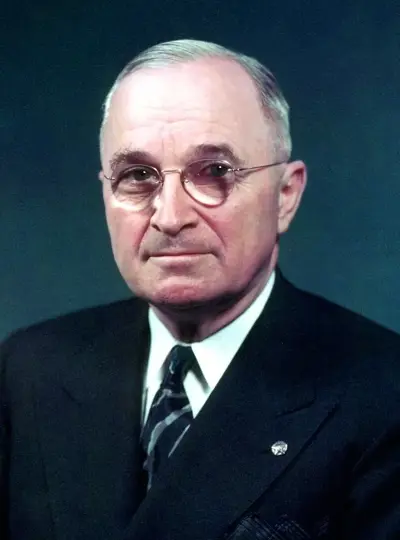
Harry S. Truman was an American politician who served as the 33rd President of the United States (1945–53). He served as a United States Senator from Missouri (1935–45) and briefly as Vice President (1945) before he succeeded to the presidency on April 12, 1945 upon the death of Franklin D. Roosevelt. He was president during the final months of World War II, and approved the plan to drop atomic bombs on Hiroshima and Nagasaki. Truman was elected in his own right in 1948. He presided over an uncertain domestic scene as America sought its path after the war and tensions with the Soviet Union increased, marking the start of the Cold War.
