Joseph Stalin Quotes
Capitalism in its imperialistic stage is a system which regards war as a legitimate method for solution of international disputes - a method which is legitimate in fact if not legally so.
Stalin, Joseph. "Interview Between J. Stalin and Roy Howard." Works, vol. 14, Red Star Press, 1978, p. 134.


Like many in the 1920s, Dewar saw the Communist Soviet Union as the biggest potential risk to peace. However, although the Russian leaders constantly castigated the West, they did not have a large military, and were for the most part highly anti-war as they saw war as the product of Capitalistic competition and the tool of the aristocracy. They had little military equipment and almost no training or officer corps with which to build any Army. Germany in contrast had the skill, experience, officers, a history of aggression, and huge resentment over what they considered their humiliating WWI defeat and peace terms. They would start WWII, not Russia.

American official foreign policy had been officially isolationist—to not get involved in the squabbles and fights of other nations. Angell however pointed out that even before WWII, America had formally been involved in 6 foreign wars and used military incursions on foreign soil on almost 100 occasions.


No one knows whether or not Castro was really sincere in making this offer. The Russians rejected it of course. If they made a first strike on the United States, Russia would have been crippled completely by the retaliation, and they knew it. Castro knew that they knew it and might have been counting on the fact that the Russians would reject his heroic offer. Alternatively, he may have been enough of a fanatic to sacrifice his own life that that of every single Cuban.
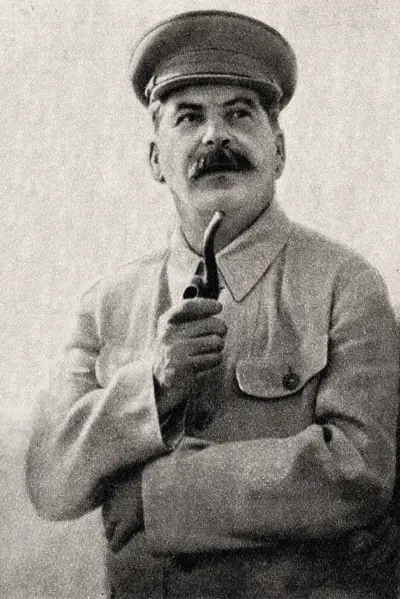
Joseph Vissarionovich Stalin was a Georgian revolutionary and the ruler of the Soviet Union from 1927 until 1953. He served as both General Secretary of the Communist Party of the Soviet Union (1922–1952) and Chairman of the Council of Ministers of the Soviet Union (1941–1953). Despite initially governing the country as part of a collective leadership, he ultimately consolidated power to become the Soviet Union's de facto dictator by the 1930s. A communist ideologically committed to the Leninist interpretation of Marxism, Stalin formalized these ideas as Marxism–Leninism while his own policies are known as Stalinism.
