Maryland Quotes
Came Ms. Margarett Brent and requested to have vote in the howse for her selfe and voyce also ... The Governor denyed that the said Ms. Brent should have any vote in the howse. And the said Ms. Brent protested against all proceedings in this present Assembly, unlesse shee may be present and have vote as aforesaid.
In 1639 the Maryland Assembly recorded what was probably the first American attempt to obtain the vote for women.
Minutes of Maryland Assembly, 1639
Sourced by: Eigen's Political and Historical Quotations

Billinghurst was physically handicapped without the use of her legs. She protested and marched in protest parades using a hand propelled tricycle which the police sometimes dumped her out of and left her immobile in alleys.

The following year, women got the right to vote, the first nation to reach that level of enlightenment.

The editorial was in support of women’s suffrage—the right to vote which at the time women did not have in Britain. Women were very active in protests and demonstrations. Tactics sometimes involved civil disobedience and chaining themselves to public buildings. It was the civil disobedience and disruptions that the newspaper referred to as the “follies and excesses.” In retrospect today, it is amazing how threatened the society felt and how they reacted to the “threat” of females voting. It does however give us a perspective on those contemporary societies which restrict women’s voting rights.


The classification of women with criminals and lunatics referred to the fact that at this time Women could not vote in New Zealand or any other nation of the world. The following year, much as a result of her efforts, New Zealand became the first country in the world to allow women to vote.


The concept of taxpayers being entitled to vote to avoid taxation without representation was fundamental to the Founding Fathers. However, the only people who paid taxes were those who owned property as there was no income tax at the time. Since the male controlled the family property, not allowing women to vote did no injury to the basic principle. However, the sexist attitude of the times ran up against this basic principles in the case of widows and unmarried women who owned property. Faced with this contradiction, some of the Founding Fathers like Lee actually favored the voting franchise for women who were widows and property owners or even unmarried female property owners. There were not enough people who saw this contradiction so that all women were originally prohibited from voting, but this quotation shows that it was a political issue at the time.


The marshal was embarrassed by his assignment to arrest this famous, elderly woman. He refused to handcuff her, gave her time to change her clothes, and took Anthony by streetcar to the courthouse trying to keep as low a profile as possible while Anthony was making speeches all the way about her unjust arrest. She was found guilty and fined $100 which she never paid.


The Organization's Periodical. The statement was repeated several times in variation between 1890 and 1920. This organization was the national leader of similar organizations in over 20 States. Many notables were involved including Louis D. Brandeis, Francis Parkman and John Lowell.


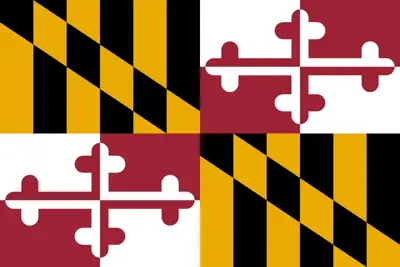
Maryland (US: /ˈmɛrələnd/ (listen) MERR-ə-lənd) is a state in the Mid-Atlantic region of the United States, bordering Virginia, West Virginia, and the District of Columbia to its south and west; Pennsylvania to its north; and Delaware and the Atlantic Ocean to its east. Baltimore is the largest city in the state and the capital is Annapolis. Among its occasional nicknames are Old Line State, the Free State, and the Chesapeake Bay State. It is named after the English Queen Henrietta Maria, known in England as Queen Mary, who was the wife of King Charles I.
