Joe Nocera Quotes
By 2006, the subprime industry was running amok, making loans—many of them fraudulent, with hidden fees and abusive terms—to just about anybody with a pulse. Most subprime loans had adjustable interest rates, which started low but then jumped significantly after a few years, making the monthly payments unaffordable for many homeowners. The lenders didn’t care because they sold the loans to Wall Street, which bundled them into mortgage-backed bonds and resold them to investors.
This quotation is classic as it digested the major reasons for the worst financial crises since the Great Depression into one paragraph that captured the essence of the problem. The great dispute has been ever since, who let this happen, who was supposed to stop it from happening, and who did what to correct the problem afterwards so that it would not happen again? In this situation, the Wall Street Houses had paid securities rating firms to give these bonds an AAA rating even though they were backed by very risky mortgages none of which had AAA ratings.
Joe Nocera, Financial Journalist, Columnist, and Writer, Explanation of the basic reason for the Meltdown of 2008 and the Great Recession that followed, “Sheila Bair’s Bank Shot”, New York Times Magazine, July 10, 2011
Sourced by: Eigen's Political and Historical Quotations


"Market mispricing" is an economic euphanism for the bankers and major investors of the nation (and abroad) bidding up the prices of the assets in order to continue to squeeze large profits even after they knew that the assets had been far overpriced. Few wanted to stop playing hoping the music would not stop in the economic game of musical chairs. When it did, there were not enough "seats" and failures casued other failures and the contagion spread.


Stock brokers and investment banks who are supposed to provide professional investment advice generally tell their customers good news about a company, market sector, or the market in general, but rarely convey bad news even if they are aware of it. They will often protect their own accounts but not tell their customers what they know and what they honestly believe.


Sovereign credit substitution is where the government, one way or another, assumes and guarantees the debts of private corporations. This is an elegant way of saying: “taxpayer bailouts”
The Meltdown of 2008 came a year later and Citigroup, one of the largest banks in America, had massive liquidity problems and in order to stave off bankruptcy the taxpayers had to come up with $45 Billion. The bank executives, as this quotation demonstrates, knew that they were in a very risky situation and that if the subprime mortgages started to default, the “music would stop” and they and the other banks would have a massive liquidity problem. None the less, they kept on investing more and more of their bank customer’s money and making money in what they knew was a highly risky enterprise. The greed clouded their judgment and when the music stopped and many were no longer dancing, the Meltdown of 2008 almost destroyed the entire national economy and triggered the Great Recession where the overwhelming proportion of Americans had to suffer for the greed of those who could not “stop dancing” even as they knew it was very dangerous.


Born thought that her agency was responsible for regulating the new esoteric financial products—derivatives including credit default swaps—for otherwise there would be no regulation at all of financial products that could dwarf the stock and bond market. Summers persuaded her to back off. When the Meltdown of 2008 hit, the huge derivative exposure of the large banks and some insurance companies was so great that it was one of the major causes for the meltdown of the entire banking system. Summers, normally a great economist not only called this one wrong, but later, along with most other government and private economists ignored a very explicit warning—See {637168}, {637986}, and {620038}.

This was yet another warning about an area that became a major factor 4 years later in the Meltdown of 2008 and the Great Recession. The George W. Bush administration, however, rejected proposals to prevent more mortgage abuses by regulating the banks and mortgage brokerage industry more.

This quotation has more than historical interest. The housing fraud technique of 1906 that Sinclair uncovered in his expose were essentially very similar to those that were used in the beginning of the 21st century on a much larger scale that contributed to the Meltdown of 2008, the Great Recession, and the weak housing industry for the next decade. The major difference is that by 2008, the banks and finance industry had developed ways to also get money from the taxpayer for the housing frauds. The expectation that the home buyer would not be able to keep making the mortgage payments was the key in both centuries.


The 7 percent was the interest students had to pay for the Federal Student Loan Program. The banks in contrast were able to obtain money at the Federal Reserve Bank Discount Window at no interest cost. Draut was one of those in the Occupy Wall Street Movement who could not understand why the government provided so much help to the banks relative to that given to students and most other segments of society. Draut, and other protestors, not only thought that the differential favoritism to the banks was unfair, but unjust in the sense that in substantial part the Meltdown of 2008 was the fault of the banks while the students and most of the other elements of American society were the victims. Both the George W. Bush and Obama administrations believed that even though the banks may have been irresponsible and the cause of much of the economic dilemma of the nation, if the banks would be allowed to fail, the Great Recession would have become a major depression and the suffering of the entire country would have been magnified many times, so Wall Street and the banks were bailed out to stave off a much worse economic disaster. It was clearly unfair and unjust, but generally perceived to have been necessary by the politicians and economists.

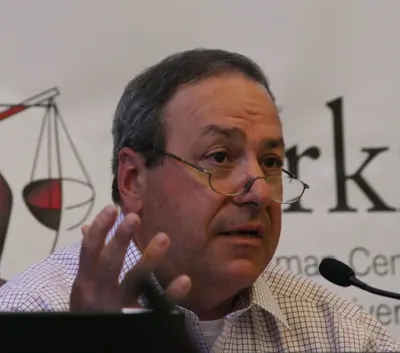
Joseph Nocera is an American business journalist and author. He writes about sports at The New York Times where he previously wrote about business and was a columnist for the newspaper's Op-Ed page. Nocera is also a business commentator for NPR’s Weekend Edition and, as of January 2017, for Bloomberg View.
