Robert McChesney Quotes
But the ultimate goal is to get rid of the media capitalists in the phone and cable companies and to divest them from control.
McChesney, Robert W. Interview. The Bullet, Socialist Project, Aug. 2009.


The President had decided to aggressively push for railroad regulation to end the rate rebate abuses that were used to support the monopolies like Standard Oil. In vintage Roosevelt tactics, he gave his first major speech on the subject in the setting and forum that would be most opposed to it. The Union League Club of Philadelphia in included the wealthiest men in the area where were most opposed to any Federal Regulation of anything. All the major railroad executives and stock owners and traders were also members. The President wanted to persuade the opponents to change their positions, and sometimes he did. He also was driven by his concept of sports and athletics so that the “opposition” should have “fair notice” for the contest ahead.


The “rebate agony” referred to a corrupt practice of the Railroads and the Large Monopolies. The railroads charged a very high rate for the transportation of important products like beef and oil. However, secretly they gave back a large percentage of the transportation rate charged to the trusts. They in turn could cut their prices and undersell all the smaller competitors who were paying “full freight” and could not afford to match the lower price. As soon as the smaller competitors were driven out of business in an area, the trust raised its rates even higher than they charged originally. The Railroad had made a small but reasonable profit on the freight of the trusts but they were guaranteed all their business. They also made huge profits on the higher rates that the small companies paid until those companies were driven out of business. Journalists like Ray Baker and Ida Tarbell had uncovered the rebate scheme which enabled the trusts to steal high amounts from the general public through unreasonably high prices. President Theodore Roosevelt was committed to try and regulate the railroads and not allow rebates but charge the same public rate to all with no rebates. Socialists like Sinclair, thought that this attempt would be hopeless—that the damage had already been done, and the trusts now had so much money that they could buy state legislatures and many in Congress to preserve their dominance.
Innovative science and technology from Edison and Tessla had produced an electrical industry that rapidly formed into a monopoly.
See {641989} & {641989} for more on the Radio Channel corrupt giveaway.
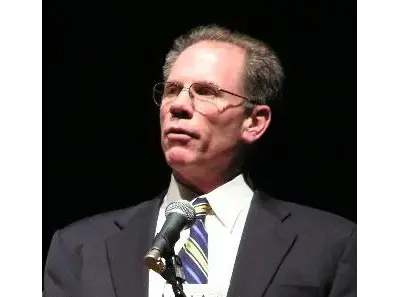
Robert Waterman McChesney is an American professor notable in the history and political economy of communications, and the role media play in democratic and capitalist societies. He is the Gutgsell Endowed Professor in the Department of Communication at the University of Illinois at Urbana–Champaign. He co-founded the Free Press, a national media reform organization. From 2002–12, he hosted Media Matters, a weekly radio program every Sunday afternoon on WILL (AM), Illinois Public Media radio.
